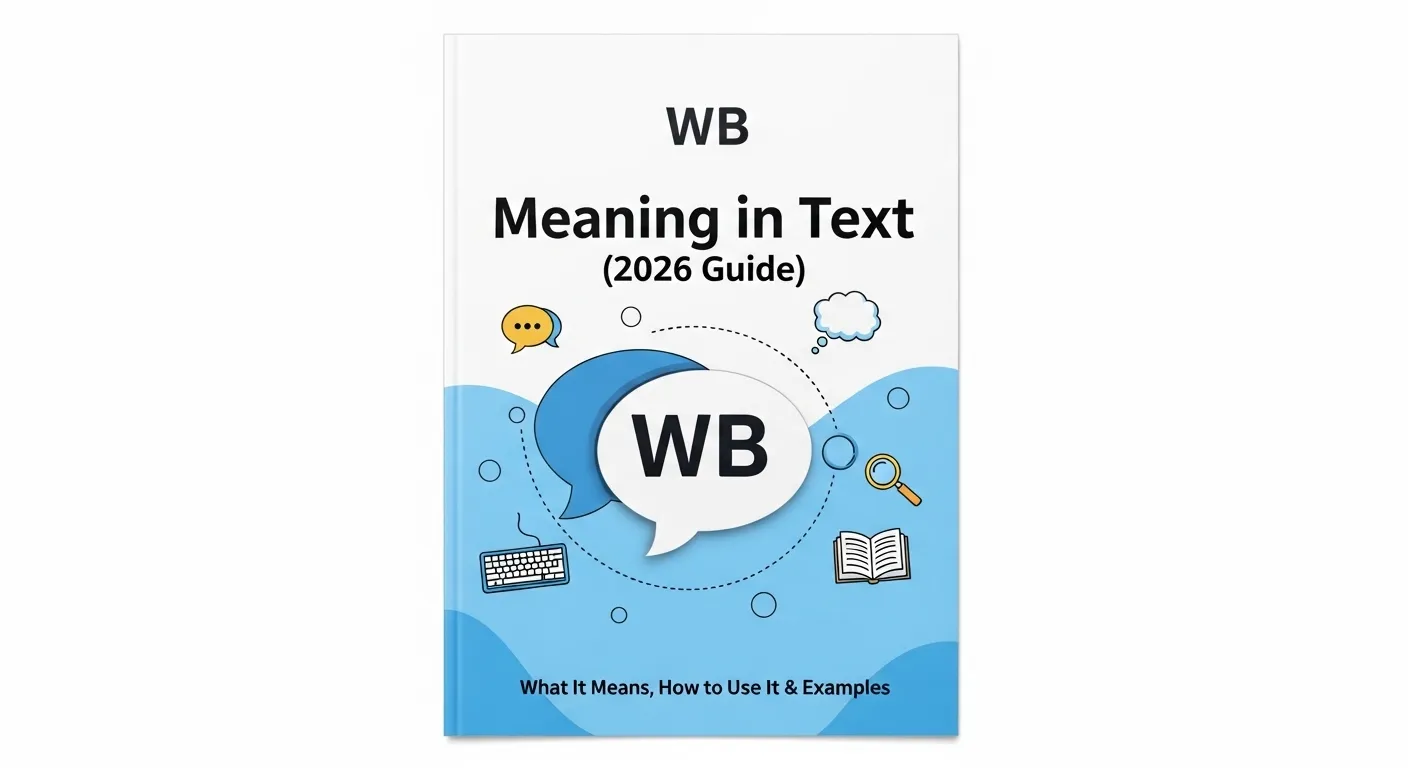
In today’s fast-paced digital world, texting and online messaging have created a whole new language. From abbreviations to acronyms, people are constantly shortening words to communicate quickly. One such commonly used abbreviation is “WB”. But what exactly does it mean?
If you’ve ever received a message with “WB” and wondered what it stands for, you’re not alone. Understanding WB meaning in text is important because it helps you stay connected, avoid confusion, and communicate more naturally in chats, social media, and online conversations.
In this comprehensive guide, we’ll break down everything you need to know about WB in texting, including its meaning, usage, examples, variations, and common misunderstandings.
What Does WB Mean in Text?
The abbreviation WB most commonly stands for:
👉 “Welcome Back”
It’s a friendly and casual phrase used to greet someone who has returned after being away—whether they were offline, inactive, or absent from a conversation.
Simple Definition:
- WB = Welcome Back
Why Is WB So Popular in Texting?
Short forms like WB are widely used because they save time and effort. In messaging platforms like WhatsApp, Messenger, Discord, or SMS, people prefer quick responses.
Reasons for its popularity:
- ⏱️ Saves typing time
- 💬 Keeps conversations fast and smooth
- 😊 Adds a friendly tone
- 📱 Fits informal communication styles
How to Use WB in Text Messages
Using WB is simple and flexible. It usually appears at the start of a message when someone returns after being away.
Common Situations:
- Someone comes back online
- A friend returns after being inactive
- A colleague rejoins a chat or meeting
Examples:
- “WB! Where did you go?”
- “Hey, WB 😊 We missed you!”
- “WB bro, ready to continue the game?”
- “WB! Let’s finish our discussion.”
WB Meaning in Different Contexts
Although “Welcome Back” is the most common meaning, WB can have different meanings depending on context.
1. Welcome Back (Most Common)
Used in casual chats:
- “WB! How was your break?”
2. Write Back
Sometimes used in emails or older messaging styles:
- “Got your message, WB soon.”
3. Well Being (Less Common)
Rare usage:
- “Hope your WB is good.”
4. Warner Bros. (Context-Specific)
In entertainment discussions:
- “WB released a new movie.”
Examples of WB in Real Conversations
To better understand WB meaning in text, here are some realistic examples:
Casual Chat
Friend 1: “I had to go eat.”
Friend 2: “WB! What did you have?”
Gaming Chat
Player 1: “AFK for 10 mins.”
Player 2: “WB! Let’s start the match.”
Work Chat
Colleague: “Back from lunch.”
You: “WB! Let’s continue the project.”
WB vs Similar Texting Abbreviations
There are many abbreviations similar to WB. Here’s how it compares:
| Abbreviation | Meaning | Usage Example |
|---|---|---|
| WB | Welcome Back | “WB! How are you?” |
| BRB | Be Right Back | “BRB, grabbing food.” |
| AFK | Away From Keyboard | “AFK for 5 mins.” |
| TTYL | Talk To You Later | “Bye, TTYL!” |
| WLCM | Welcome | “WLCM to the group!” |
When Should You Use WB?
Knowing when to use WB makes your communication more natural.
Use WB When:
- Someone returns after being offline
- A person comes back into a chat
- A teammate resumes activity
Avoid WB When:
- In formal emails or professional writing
- When the context is unclear
- When speaking to someone unfamiliar with texting slang
Formal vs Informal Usage
WB is informal, so it’s best used in casual settings.
Informal:
- Chats with friends
- Social media conversations
- Gaming or online communities
Formal Alternative:
Instead of WB, use:
- “Welcome back”
- “Glad to have you back”
- “Good to see you again”
Common Misunderstandings About WB
Even though WB meaning in text is simple, people sometimes misunderstand it.
Misconceptions:
❌ WB always means the same thing
✔️ It depends on context (though “Welcome Back” is most common)
❌ WB is appropriate everywhere
✔️ It’s mostly for informal communication
❌ Everyone understands WB
✔️ Some people may not be familiar with texting slang
Alternatives to WB in Texting
If you want to mix things up or sound more expressive, try these alternatives:
Casual Alternatives:
- “Welcome back!”
- “You’re back!”
- “Hey, good to see you again!”
Fun Variations:
- “WB 😊 missed you!”
- “Finally back!”
- “Look who’s back!”
WB in Social Media & Online Platforms
You’ll often see WB used across different platforms:
Where WB is Common:
- WhatsApp chats
- Facebook Messenger
- Instagram DMs
- Discord servers
- Online games
Example in Social Media:
- “WB to Instagram after a long break!”
Is WB Still Relevant in 2026?
Yes—WB remains widely used even in 2026. Despite the rise of emojis, voice notes, and AI-generated messages, short text abbreviations are still popular because they are:
- Quick
- Convenient
- Universally understood (in casual settings)
Tips for Using WB Effectively
To sound natural and confident when using WB, keep these tips in mind:
✅ Do:
- Use it casually with friends
- Pair it with emojis for warmth 😊
- Use it at the right moment
❌ Don’t:
- Use it in formal communication
- Overuse it in every message
- Use it without context
Frequently Asked Questions (FAQs)
1. What does WB mean in texting?
WB usually means “Welcome Back.” It’s used to greet someone who has returned after being away.
2. Is WB rude or polite?
WB is polite and friendly, especially in casual conversations. It shows you’re acknowledging someone’s return.
3. Can WB mean something else?
Yes, depending on context, WB can also mean:
- Write Back
- Well Being
- Warner Bros.
4. Is WB appropriate for professional use?
Not really. In professional settings, it’s better to write “Welcome back” fully.
5. How do you reply to WB?
You can respond casually:
- “Thanks!”
- “Good to be back 😊”
- “Missed you guys!”
6. Is WB outdated slang?
No, WB is still widely used in modern texting and remains relevant.
7. What is the difference between WB and BRB?
- WB = Welcome Back (used when someone returns)
- BRB = Be Right Back (used before leaving briefly)
Conclusion
In summary, WB meaning in text is simple yet important for everyday communication. It stands for “Welcome Back” and is widely used in casual conversations to greet someone returning after being away.
Key Takeaways:
- WB is friendly, informal, and widely used
- It helps keep conversations quick and engaging
- Context matters—though “Welcome Back” is the most common meaning
- Best used in chats, not formal communication
Final Tip:
Next time someone returns to your chat, try sending a quick “WB 😊”—it’s a small gesture that makes conversations feel more welcoming and human.

I’m a language-focused blogger from the United States, and I write about modern texting habits and online expressions. My goal is to help readers stay up to date with constantly evolving digital slang by sharing accurate meanings, practical usage tips, and real conversational examples.