In today’s fast-paced digital world, texting and online messaging have created a whole new language filled with abbreviations, acronyms, and slang. One such commonly used shorthand is “NTY.” If you’ve ever received this in a message and paused to wonder what it means, you’re not alone.
Understanding “NTY meaning in text” is important because it helps you communicate clearly, avoid misunderstandings, and stay up to date with modern texting trends. Whether you’re chatting with friends, replying to offers, or navigating social media conversations, knowing how and when to use “NTY” can make your communication smoother and more natural.
In this comprehensive guide, we’ll break down everything you need to know about NTY, including its definition, origins, examples, alternatives, and common mistakes to avoid.
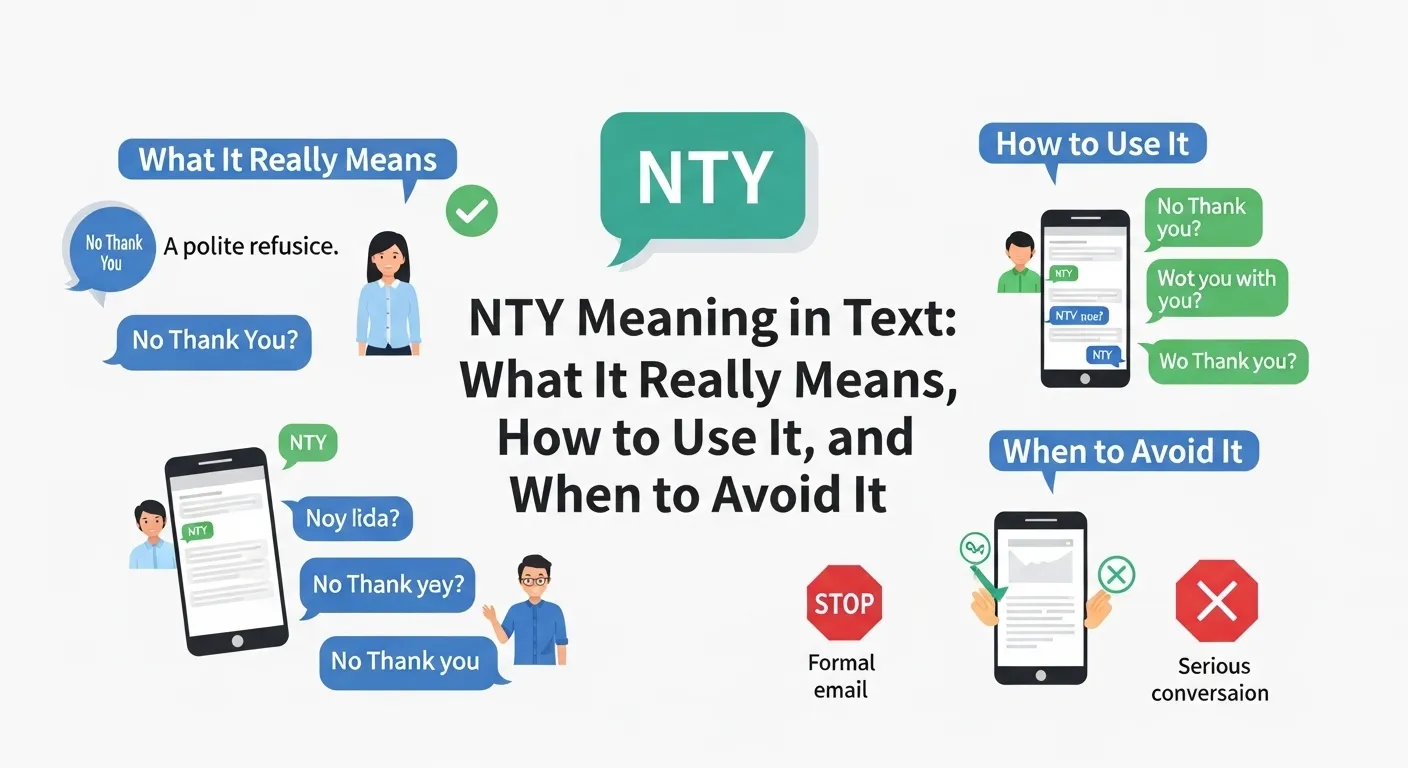
What Does NTY Mean in Text?
NTY stands for:
👉 “No, Thank You”
It’s a polite and concise way to decline something in text messages, chats, or online conversations.
Simple Definition:
- NTY = No, Thank You
- Used to politely refuse an offer, suggestion, or invitation.
Example:
- Friend: “Do you want to join us for dinner tonight?”
- You: “NTY, I’m a bit busy today.”
Even though it’s short, it still carries a tone of politeness because of the “thank you” included.
Why Do People Use NTY?
The main reason people use abbreviations like NTY is convenience. In a world where quick replies are expected, shorter messages save time and effort.
Key Reasons:
- ⏱️ Saves time while texting
- 📱 Fits casual digital communication style
- 😊 Maintains politeness while declining
- 💬 Common in chats, DMs, and gaming conversations
The Tone Behind NTY: Polite or Rude?
This is where things get interesting. While NTY is technically polite, its tone can depend on the context.
When NTY Feels Polite:
- Used among friends or peers
- In casual conversations
- When tone is already friendly
When NTY Might Feel Rude:
- In formal or professional settings
- When responding to something thoughtful or serious
- If it feels too short or dismissive
Example Comparison:
| Response | Tone |
|---|---|
| NTY | Casual, quick |
| No, thank you! | Polite and neutral |
| I appreciate it, but I’ll pass | Warm and respectful |
👉 Tip: If you’re unsure, go with a slightly longer reply to avoid sounding cold.
Where Is NTY Commonly Used?
You’ll find NTY across various platforms and contexts.
1. Text Messaging
- Casual chats with friends
- Quick replies to invitations
2. Social Media
- Instagram DMs
- Snapchat conversations
- Twitter replies
3. Online Gaming
- Declining team invites or trades
- Responding quickly during gameplay
4. Online Marketplaces
- Turning down offers politely
- Example: “Would you accept a lower price?” → “NTY”
Examples of NTY in Real Conversations
Here are some practical examples to show how NTY is used naturally:
Casual Conversations
- “Want some coffee?” → “NTY, I already had one.”
- “Come over tonight?” → “NTY, maybe next time!”
Online Shopping
- “Can you lower the price?” → “NTY, price is firm.”
Gaming
- “Join our squad?” → “NTY, I’m playing solo.”
Work (Less Appropriate)
- Boss: “Can you stay late today?”
- You: ❌ “NTY” (Too blunt)
- Better: “Sorry, I won’t be able to today.”
NTY vs Similar Text Abbreviations
There are many abbreviations similar to NTY. Let’s compare them:
| Abbreviation | Meaning | Tone |
|---|---|---|
| NTY | No, Thank You | Polite but casual |
| Nope | No | Informal, can sound blunt |
| Nah | No | Very casual |
| NFS | Not For Sale | Specific context |
| TY | Thank You | Positive |
| NP | No Problem | Friendly |
👉 Key Insight: NTY strikes a balance between shortness and politeness, unlike harsher options like “Nope.”
Alternatives to NTY (When You Want to Sound More Polite)
Sometimes, NTY might feel too short. Here are better alternatives depending on the situation:
Polite Alternatives:
- “No, thank you 😊”
- “I appreciate it, but I’ll pass.”
- “Thanks, but not this time.”
- “I’m good, thanks!”
Professional Alternatives:
- “Thank you for the offer, but I’ll have to decline.”
- “I appreciate your suggestion, but I won’t be able to.”
Friendly Alternatives:
- “Maybe next time!”
- “Not today, but thanks for asking!”
When You Should Avoid Using NTY
Despite its usefulness, NTY isn’t always appropriate.
Avoid NTY in These Situations:
❌ Professional Emails or Work Chats
- It can seem unprofessional or dismissive
❌ Serious Conversations
- Might appear insensitive
❌ When Declining Important Offers
- Use a more thoughtful response instead
❌ With People You Don’t Know Well
- Can come off as too casual
The Evolution of Text Slang Like NTY
Text slang has evolved rapidly with the rise of smartphones and social media.
How It Started:
- Early SMS messages had character limits
- People shortened phrases to save space
Modern Usage:
- Now driven by speed and convenience
- Influenced by internet culture and memes
Other Popular Slang Examples:
- LOL (Laugh Out Loud)
- BRB (Be Right Back)
- IMO (In My Opinion)
- IDK (I Don’t Know)
👉 NTY is part of this larger trend of efficient digital communication.
Common Misunderstandings About NTY
Even simple abbreviations can be misunderstood.
Misconception #1: NTY is rude
✔️ Truth: It’s polite, but tone depends on context.
Misconception #2: NTY is formal
✔️ Truth: It’s mostly informal and casual.
Misconception #3: NTY can be used everywhere
✔️ Truth: It’s best for casual conversations only.
Tips for Using NTY Effectively
Want to use NTY like a pro? Keep these tips in mind:
✅ Do:
- Use it in casual chats
- Pair it with emojis if needed 😊
- Add extra words for warmth (“NTY, maybe later!”)
❌ Don’t:
- Use it in formal communication
- Reply with just “NTY” in sensitive situations
- Overuse it—it can sound repetitive
NTY in Different Contexts (Quick Reference Table)
| Situation | Use NTY? | Better Option |
|---|---|---|
| Chat with friends | ✅ Yes | NTY 👍 |
| Workplace message | ❌ No | “I’ll pass, thanks.” |
| Online marketplace | ✅ Yes | NTY works well |
| Formal email | ❌ No | Full sentence |
| Gaming | ✅ Yes | NTY is common |
FAQs About NTY Meaning in Text
1. What does NTY mean in texting?
NTY means “No, Thank You.” It’s a polite way to decline something in casual conversations.
2. Is NTY rude or polite?
It’s generally polite, but can feel blunt depending on the context. Adding extra words or emojis can soften it.
3. Can I use NTY in professional settings?
No, it’s better to avoid NTY in formal or professional communication. Use full sentences instead.
4. What is the difference between NTY and “Nope”?
- NTY: Polite and respectful
- Nope: Casual and can sound blunt
5. Is NTY commonly used on social media?
Yes, it’s widely used on platforms like Instagram, Snapchat, and online marketplaces.
6. Can NTY be misunderstood?
Yes, especially if the tone isn’t clear. Some people may see it as too short or dismissive.
7. What are better alternatives to NTY?
Options include:
- “No, thank you 😊”
- “I’ll pass, thanks”
- “Maybe next time!”
Conclusion: Mastering NTY in Modern Texting
By now, you should have a clear understanding of “NTY meaning in text” and how to use it effectively.
Key Takeaways:
- NTY = No, Thank You
- It’s a quick, polite way to decline something
- Best used in casual conversations
- Can feel blunt in formal or sensitive contexts
Actionable Tips:
- Add warmth when needed (“NTY, thanks though!”)
- Avoid using it in professional settings
- Choose alternatives when tone matters
In a world driven by fast communication, small abbreviations like NTY play a big role. When used correctly, they help you stay polite, efficient, and socially aware in your digital interactions.

I’m a language-focused blogger from the United States, and I write about modern texting habits and online expressions. My goal is to help readers stay up to date with constantly evolving digital slang by sharing accurate meanings, practical usage tips, and real conversational examples.