In today’s fast-paced digital world, text messaging slang and abbreviations are everywhere. From casual chats to social media conversations, people love using short forms to communicate quickly. One such abbreviation you might have come across is “HYD”. But what exactly does it mean?
If you’ve ever received a message with “HYD” and felt confused, you’re not alone. Understanding HYD meaning in text can help you stay updated with modern communication trends and avoid awkward misunderstandings.
In this comprehensive guide, we’ll break down everything you need to know about HYD, including its meanings, usage, examples, alternatives, and more.
📌 What Does HYD Mean in Text?
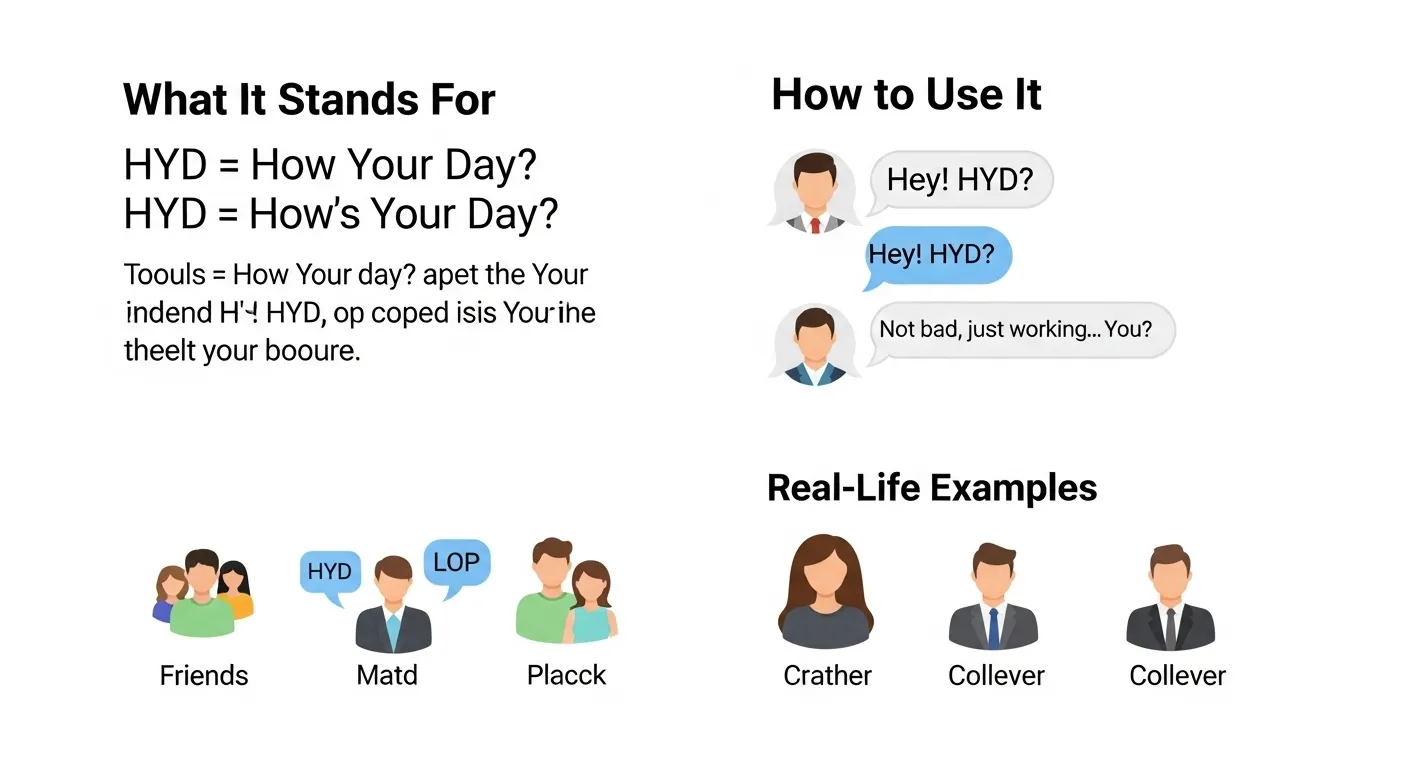
The abbreviation HYD most commonly stands for:
👉 “How You Doing?”
It’s a casual, friendly way of asking someone how they are—similar to saying:
- “How are you?”
- “What’s up?”
- “How’s it going?”
✔️ Simple Definition:
HYD = A quick and informal greeting used in text conversations to check in on someone.
💡 Why Do People Use HYD?
In the age of instant messaging, speed and convenience matter. That’s why abbreviations like HYD are popular.
Reasons people use HYD:
- ⏱️ Saves time while typing
- 📱 Fits mobile communication style
- 😊 Feels casual and friendly
- 💬 Common in social media chats
🧠 The Origin of HYD in Texting Culture
While HYD doesn’t have a deeply documented origin, it evolved naturally from the rise of:
- SMS texting in early mobile phones
- Chat platforms like MSN Messenger and Yahoo Chat
- Modern apps like WhatsApp, Instagram, and Snapchat
As users started shortening phrases, “How you doing?” quickly became HYD.
🗨️ How to Use HYD in Conversations
Using HYD is simple and informal. It usually appears at the beginning of a conversation.
📱 Example Conversations:
Example 1:
- A: HYD?
- B: I’m good! Just chilling. You?
Example 2:
- A: Hey! HYD today?
- B: Pretty busy, but doing okay 😊
Example 3:
- A: HYD after the exam?
- B: Relieved! It was tough 😅
🔄 Different Contexts of HYD Meaning
Although “How You Doing?” is the most common meaning, context always matters.
1. Casual Greeting
- Most frequent use
- Friendly check-in
2. Flirty Context 😉
Sometimes HYD can carry a slightly flirty tone, depending on the conversation.
Example:
- “Hey… HYD? Haven’t heard from you 😏”
3. Reconnecting With Someone
Used when reaching out after a long time.
Example:
- “Long time no talk! HYD?”
⚠️ Common Misunderstandings About HYD
Even though HYD is simple, people sometimes misinterpret it.
❌ Misconceptions:
- Thinking it’s a technical term
- Confusing it with other abbreviations
- Assuming it has a hidden meaning
✔️ Reality:
It’s just a friendly, informal greeting.
🔤 HYD vs Similar Text Abbreviations
To better understand HYD, let’s compare it with other popular texting acronyms:
| Abbreviation | Meaning | Tone | Usage Context |
|---|---|---|---|
| HYD | How You Doing? | Casual | Friendly greeting |
| HBU | How About You? | Neutral | Follow-up response |
| WYD | What You Doing? | Casual | Asking activity |
| SUP | What’s Up? | Informal | Greeting |
| HRU | How Are You? | Slightly formal | General check-in |
🧩 When Should You Use HYD?
HYD works best in informal settings.
✔️ Appropriate Situations:
- Chatting with friends
- Messaging classmates
- Social media conversations
- Casual texting
❌ Avoid Using HYD:
- In professional emails
- Formal business communication
- Academic writing
📲 HYD in Social Media & Messaging Apps
HYD is commonly used across platforms like:
- Instagram DMs
- Snapchat
- Facebook Messenger
- TikTok comments
It’s especially popular among younger audiences who prefer short, quick messages.
💬 Variations of HYD
You might see slightly different versions of HYD in texts:
Common variations:
- HYD? – Standard form
- Hey HYD – Friendly opener
- HYD today? – More specific
- HYD lately? – Checking long-term well-being
✍️ Examples of HYD in Real-Life Scenarios
🧑🤝🧑 Friends Chat
- “HYD bro? Wanna hang out?”
💕 Romantic Context
- “Hey 😊 HYD tonight?”
👨👩👧 Family
- “HYD? Haven’t talked all week!”
🎮 Gaming Chat
- “HYD? Ready to play?”
🔄 Alternatives to HYD
If you want variety in your texting, here are some alternatives:
Casual Alternatives:
- “What’s up?”
- “How’s it going?”
- “How are things?”
- “What’s new?”
Slang Alternatives:
- “WYD?” (What You Doing?)
- “SUP?”
- “Yo, how you been?”
🧠 Tips for Using HYD Effectively
To sound natural and friendly, keep these tips in mind:
✔️ Do:
- Use with people you know
- Keep tone friendly
- Add emojis for warmth 😊
❌ Don’t:
- Use in formal settings
- Overuse in every message
- Assume everyone understands slang
🌍 Why Understanding Text Slang Matters
Learning abbreviations like HYD helps you:
- 💬 Communicate faster
- 🤝 Connect with younger audiences
- 📱 Stay relevant in digital culture
- 😄 Avoid confusion in chats
❓ FAQs About HYD Meaning in Text
1. What does HYD stand for in texting?
HYD stands for “How You Doing?”, a casual way to greet someone.
2. Is HYD formal or informal?
HYD is informal and should only be used in casual conversations.
3. Can HYD be used in professional communication?
No, it’s better to use full phrases like “How are you?” in professional settings.
4. Is HYD the same as WYD?
No.
- HYD = How You Doing?
- WYD = What You Doing?
5. Is HYD used worldwide?
Yes, but it’s more common in English-speaking digital conversations.
6. Can HYD be flirty?
Yes, depending on tone and context, it can sound slightly flirty.
7. What should I reply to HYD?
You can respond naturally, such as:
- “I’m good! You?”
- “Doing great 😊”
- “Not bad, just busy.”
📝 Conclusion
By now, you should clearly understand the HYD meaning in text and how to use it effectively.
🔑 Key Takeaways:
- HYD means “How You Doing?”
- It’s a casual, friendly greeting
- Best used in informal conversations
- Context matters for tone and meaning
🚀 Final Tip:
If you want to sound modern and relatable in chats, using abbreviations like HYD can help—but always match your tone to the situation.

I’m a language-focused blogger from the United States, and I write about modern texting habits and online expressions. My goal is to help readers stay up to date with constantly evolving digital slang by sharing accurate meanings, practical usage tips, and real conversational examples.