In today’s fast-paced digital world, texting has become one of the most common ways we communicate. Whether it’s a quick reply, a delayed response, or a one-word message, every text carries meaning. Understanding the meaning in text reply is essential for avoiding misunderstandings, building better relationships, and communicating effectively.
This guide will break down everything you need to know about interpreting text replies—from tone and timing to emojis and abbreviations—so you can read between the lines like a pro.
🧠 What Does “Meaning in Text Reply” Really Mean?
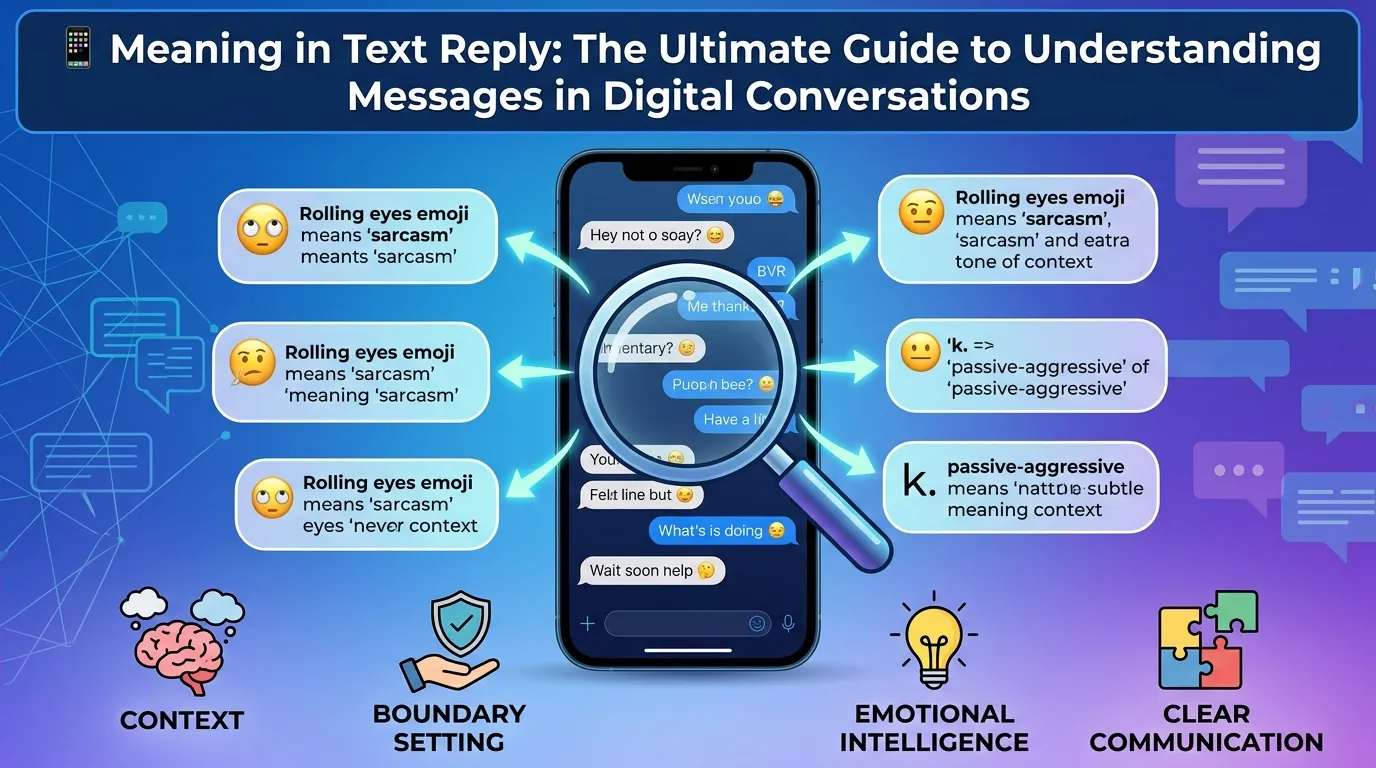
The meaning in text reply refers to the intention, emotion, or message behind a written response in digital communication. Unlike face-to-face conversations, texting lacks:
- Facial expressions
- Voice tone
- Body language
Because of this, people rely on words, punctuation, timing, and emojis to convey meaning.
👉 Example:
- “Okay.” = Neutral or slightly cold
- “Okay 😊” = Friendly and agreeable
Same word, different meaning!
📜 A Brief History of Text Communication
Text messaging has evolved dramatically over time:
- SMS era (1990s–2000s): Limited characters, lots of abbreviations
- Smartphone era: Emojis, GIFs, voice notes
- Modern messaging apps: Real-time reactions, typing indicators
This evolution has made texting more expressive—but also more complex to interpret.
🔍 Why Understanding Text Replies Matters
Misinterpreting a message can lead to confusion or even conflict. Knowing how to read text replies helps you:
- Avoid unnecessary misunderstandings
- Improve personal and professional relationships
- Communicate more clearly
- Respond appropriately
💬 Common Types of Text Replies and Their Meanings
1. 👍 One-Word Replies
Short responses can mean different things depending on context.
Examples:
- “K” → Possibly annoyed or uninterested
- “Sure” → Agreeing, but maybe not enthusiastically
- “Fine” → Could signal frustration
👉 Tip: Pay attention to prior conversation tone.
2. ⏳ Delayed Replies
The timing of a reply often carries meaning.
- Instant reply: Interest, engagement
- Delayed reply: Busy, distracted, or less priority
- No reply: Could mean disinterest or oversight
⚠️ Don’t jump to conclusions—people have different texting habits.
3. 😂 Emoji-Based Replies
Emojis add emotional context.
Common meanings:
- 😂 = Something is funny
- ❤️ = Love or appreciation
- 👍 = Agreement or acknowledgment
- 😐 = Indifference or awkwardness
👉 Without emojis, messages can feel colder or more serious.
4. 📖 Long vs. Short Replies
- Long replies: Interest, effort, engagement
- Short replies: Busy, tired, or uninterested
👉 Example:
- “That sounds amazing! Tell me more!” → Engaged
- “Cool.” → Minimal interest
5. ❓ Question-Based Replies
If someone asks questions, it usually shows:
- Interest
- Curiosity
- Desire to continue conversation
👉 No questions? They might not be fully engaged.
📊 How Context Changes Meaning in Text Replies
Context is everything in texting.
| Situation | Reply | Possible Meaning |
|---|---|---|
| Argument | “Whatever” | Dismissive |
| Casual chat | “Whatever” | Relaxed |
| Work message | “Noted” | Professional acknowledgment |
| Friendly chat | “Noted” | Could seem cold |
👉 Always consider:
- Relationship
- Conversation history
- Emotional tone
⚠️ Common Misunderstandings in Text Replies
1. Overthinking Short Messages
Not every “K” means someone is upset.
2. Assuming Tone Without Evidence
Text lacks vocal tone—don’t assume negativity.
3. Ignoring Cultural Differences
Some people naturally text briefly.
4. Misreading Delays
People may be busy, not ignoring you.
🔑 Key Elements That Influence Meaning in Text Replies
✍️ 1. Word Choice
Words like “fine,” “sure,” or “okay” can vary in tone.
⏰ 2. Timing
Quick vs. delayed responses can change interpretation.
😊 3. Emojis & Punctuation
- “Thanks!” = Friendly
- “Thanks.” = Formal or distant
🔄 4. Conversation Flow
Previous messages affect meaning.
📱 Popular Text Abbreviations and Their Meanings
Here are some commonly used abbreviations:
- LOL = Laughing out loud
- BRB = Be right back
- IDK = I don’t know
- IMO = In my opinion
- TTYL = Talk to you later
👉 These shortcuts can change how a message feels—casual vs. formal.
💡 Practical Examples of Text Reply Meanings
Example 1:
You: “Do you want to hang out?”
Reply: “Maybe”
➡️ Meaning: Uncertain or not very interested
Example 2:
You: “I got the job!”
Reply: “Congrats!! 🎉”
➡️ Meaning: Genuine excitement
Example 3:
You: “Are you upset?”
Reply: “No.”
➡️ Meaning: Could be neutral—or hiding emotion
🔄 Alternatives to Avoid Misinterpretation
To make your own texts clearer, try:
- Adding emojis 😊
- Writing complete sentences
- Asking follow-up questions
- Clarifying tone when needed
👉 Example:
Instead of “Fine,” say “I’m okay, just a bit tired.”
🧭 Tips to Better Understand Text Replies
- Don’t rely on a single message—look at patterns
- Ask for clarification if unsure
- Avoid overanalyzing
- Consider the sender’s personality
- Use empathy when interpreting
🧑🤝🧑 Meaning in Text Reply in Relationships
Text replies can reveal emotional dynamics.
❤️ Positive Signs:
- Quick replies
- Engaging questions
- Emojis and enthusiasm
🚩 Warning Signs:
- Consistent short replies
- Ignoring messages
- Lack of engagement
👉 Communication style matters more than one message.
💼 Meaning in Text Reply in Professional Communication
In work settings, text replies tend to be:
- More formal
- Concise
- Direct
Examples:
- “Received, धन्यवाद.” → Polite acknowledgment
- “Will do.” → Task accepted
- “Let’s discuss.” → Needs clarification
👉 Avoid overinterpreting brevity in professional texts.
🌍 Cultural Differences in Texting
Different cultures interpret text replies differently:
- Some prefer short, efficient messages
- Others expect expressive communication
- Emoji usage varies widely
👉 Understanding these differences can prevent confusion.
❓ FAQs About Meaning in Text Reply
1. Why do short replies feel rude?
Because they lack emotional cues, making them seem cold—even if unintentional.
2. Does a late reply mean disinterest?
Not always. People may be busy, distracted, or overwhelmed.
3. What does “K” mean in texting?
It can mean acknowledgment, but sometimes feels dismissive depending on context.
4. How can I avoid being misunderstood in texts?
Use emojis, complete sentences, and clarify your tone when needed.
5. Are emojis necessary in texting?
Not required, but they help convey emotion and tone.
6. Why do people give one-word replies?
They may be busy, tired, or simply prefer concise communication.
7. Should I ask if I don’t understand a text reply?
Yes—clarification is better than making assumptions.
🏁 Conclusion
Understanding the meaning in text reply is a valuable skill in today’s digital world. Since texting lacks tone and body language, meaning is shaped by words, timing, emojis, and context.
To improve your texting skills:
- Pay attention to patterns, not just single messages
- Avoid overthinking
- Communicate clearly and thoughtfully
- Ask when in doubt
At the end of the day, texting is just one form of communication. The key is to stay mindful, empathetic, and open—so your conversations remain clear, meaningful, and stress-free.

I’m a language-focused blogger from the United States, and I write about modern texting habits and online expressions. My goal is to help readers stay up to date with constantly evolving digital slang by sharing accurate meanings, practical usage tips, and real conversational examples.