In today’s fast-paced digital world, people love using short, simple expressions to communicate quickly. One such commonly used word is “ditto.” If you’ve ever seen someone reply with “ditto” in a chat and wondered what it really means, you’re not alone.
This guide will break down the ditto meaning in text, its origins, how to use it properly, examples, alternatives, and common misunderstandings. Whether you’re texting friends, chatting on social media, or replying in a professional setting, understanding this word can make your communication smoother and more natural.
What Does “Ditto” Mean in Text?
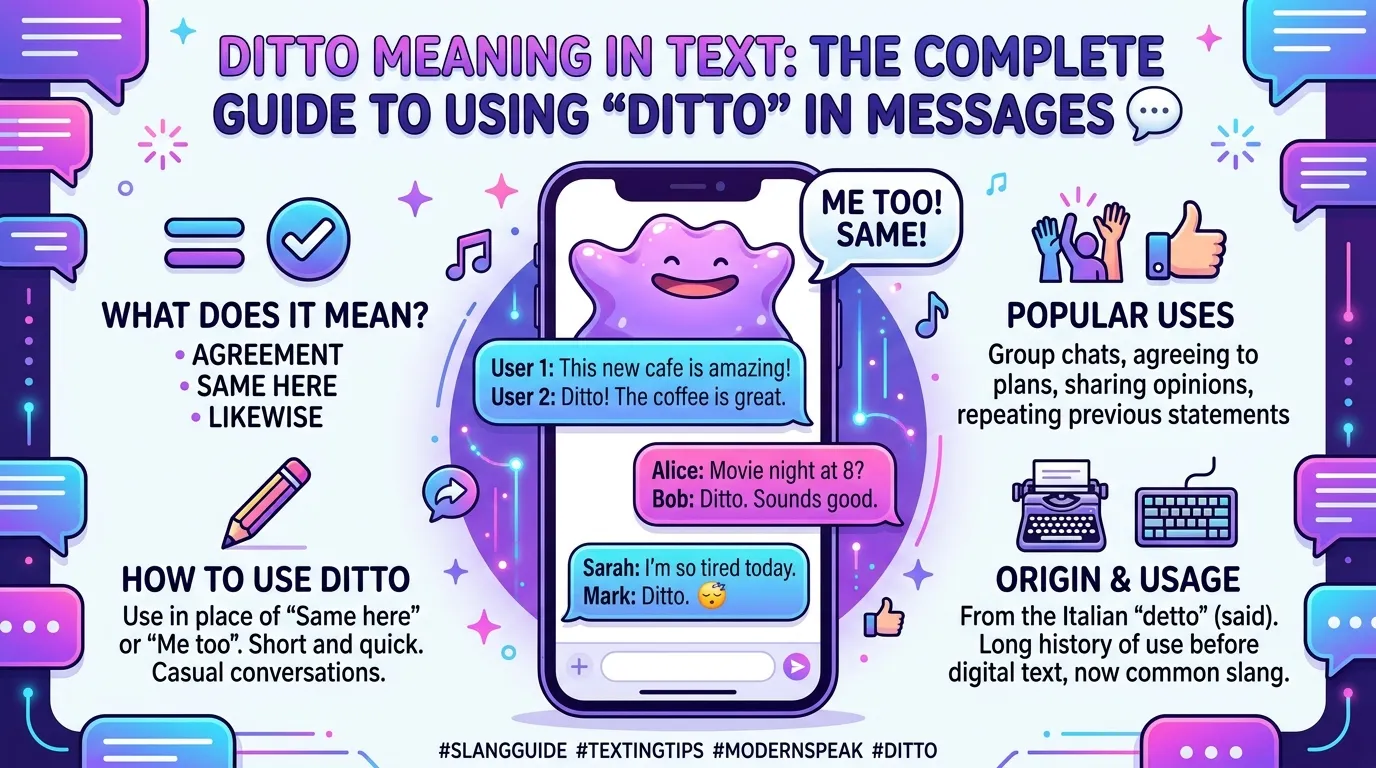
At its core, “ditto” means “the same as what was just said.” It is used to repeat or agree with a previous statement without restating it fully.
Simple Definition:
Ditto = Same here / I agree / Me too
Example:
- Person A: “I love pizza 🍕”
- Person B: “Ditto!”
👉 Person B is saying they also love pizza.
The Origin of the Word “Ditto”
The word “ditto” has an interesting history. It comes from the Italian word “detto,” which means “said” or “already mentioned.”
Originally, it was used in writing and bookkeeping to avoid repeating the same words over and over again. Instead of rewriting a word, people would simply write ditto or use a ditto mark (〃).
Fun Fact:
The famous fictional character Ditto from the Pokémon series was named after this concept because it can copy other creatures!
How “Ditto” Is Used in Text Messaging
In modern texting and online conversations, “ditto” is used in several ways:
1. To Agree with Someone
- “That movie was amazing!”
- “Ditto!”
2. To Express Similar Feelings
- “I’m so tired today 😴”
- “Ditto…”
3. To Avoid Repetition
- “Happy Birthday!”
- “Ditto!”
4. To Show Shared Opinions
- “This weather is perfect 🌤️”
- “Ditto!”
When to Use “Ditto” (And When Not To)
✅ Appropriate Situations:
- Casual conversations with friends
- Social media comments
- Text messages
- Informal chats
❌ Avoid Using “Ditto” In:
- Formal emails
- Professional documents
- Academic writing
- Serious conversations
👉 In formal settings, it’s better to say:
- “I agree”
- “Likewise”
- “Same applies”
Examples of “Ditto” in Real Conversations
Casual Chat Examples:
- Friend: “I’m craving burgers 🍔”
- You: “Ditto!”
- Friend: “This song is stuck in my head 🎵”
- You: “Ditto 😂”
Social Media Example:
- Comment 1: “Best show ever!”
- Comment 2: “Ditto!”
Romantic Example:
- Partner: “I love you ❤️”
- You: “Ditto”
⚠️ Important Note:
Using “ditto” in romantic situations can sometimes feel less emotional compared to saying “I love you too.” Tone matters!
Different Meanings Based on Context
The meaning of “ditto” can slightly change depending on how it’s used:
| Context | Meaning |
|---|---|
| Agreement | “I agree” |
| Emotion | “I feel the same” |
| Repetition | “Same as above” |
| Humor | Playful mimicry |
Alternatives to “Ditto” in Text
If you want to mix things up, here are some common alternatives:
Informal Alternatives:
- Same here
- Me too
- Same
- Yup, same
- Totally
Slightly Formal Alternatives:
- Likewise
- I agree
- Same applies
Slang Alternatives:
- “+1”
- “Facts”
- “This 👆”
“Ditto” vs “Same” vs “Me Too”
These expressions are similar but have subtle differences:
| Phrase | Usage |
|---|---|
| Ditto | Repeats previous statement |
| Same | Casual agreement |
| Me too | Personal agreement |
Example:
- “I love coffee ☕”
- “Me too” (more personal)
- “Same” (casual)
- “Ditto” (slightly playful or old-school)
Common Misunderstandings About “Ditto”
1. Thinking It’s Always Formal
❌ Not true — it’s mostly informal today.
2. Using It in Emotional Situations
Saying “ditto” instead of expressing feelings fully can come across as lazy or unemotional.
3. Overusing It
Using “ditto” too often can make your replies seem repetitive or disengaged.
Is “Ditto” Still Popular in 2026?
Yes—but its popularity has slightly declined due to newer slang.
Trending Alternatives Today:
- “Same”
- “Mood”
- “Relatable”
- “Facts”
Still, “ditto” remains:
- Widely understood
- Easy to use
- Timeless in casual communication
Practical Use Cases of “Ditto”
1. Group Chats
- Saves time when multiple people agree
2. Online Discussions
- Quick way to support a comment
3. Friendly Conversations
- Adds a casual tone
4. Light Humor
- Can sound playful or slightly sarcastic
Tips for Using “Ditto” Effectively
- ✔ Use it in casual settings
- ✔ Pair it with emojis for tone (e.g., “Ditto 😂”)
- ✔ Avoid it in serious emotional conversations
- ✔ Don’t overuse it
Frequently Asked Questions (FAQs)
1. What does “ditto” mean in texting?
“Ditto” means “the same as what was just said” or “I agree.”
2. Is “ditto” rude?
No, but it can feel lazy or impersonal in emotional or serious conversations.
3. Can I use “ditto” in professional communication?
It’s better to avoid it. Use phrases like “I agree” or “likewise” instead.
4. Is “ditto” slang?
Not exactly. It’s a standard word that has become informal in modern usage.
5. What is the difference between “ditto” and “same”?
- “Ditto” repeats a statement
- “Same” expresses casual agreement
6. Can “ditto” be used in romantic texts?
Yes, but it may feel less meaningful than saying something like “I love you too.”
7. Why do people still use “ditto”?
Because it’s:
- Quick
- Easy
- Universally understood
Conclusion
Understanding the ditto meaning in text can make your conversations more efficient and expressive. It’s a simple yet powerful word that helps you agree, relate, and respond quickly without repeating yourself.
Key Takeaways:
- “Ditto” means “same as above”
- Best used in casual conversations
- Avoid in formal or emotional contexts
- Use alternatives to keep your texting fresh
👉 Final Tip:
Use “ditto” when you want to keep things light and quick—but don’t forget that sometimes, a more personal response can make a bigger impact.

I’m a content editor and language researcher based in California with a focus on texting terminology, internet slang, and Gen Z communication styles. Through my writing, I help readers understand what popular text phrases mean, how they’re used, and when they fit naturally into casual conversations.