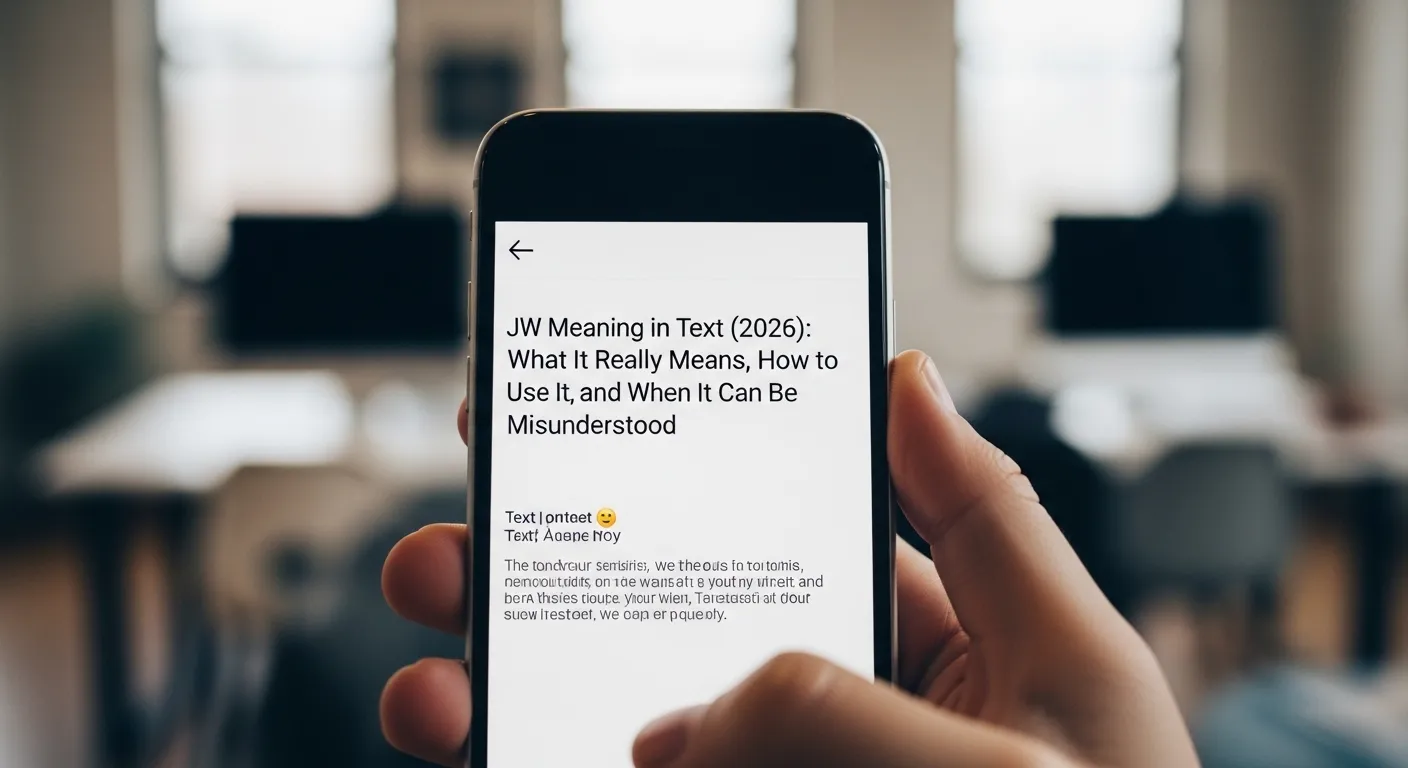
In today’s fast-moving digital world, abbreviations and slang dominate how we communicate. From quick replies on social media to casual texting with friends, short forms help us save time—but they can also create confusion. One such abbreviation that often leaves people puzzled is “JW.”
So, what exactly does JW mean in text? Why do people use it, and how can you interpret it correctly depending on context?
This detailed guide breaks everything down—from definitions and examples to real-life usage, misunderstandings, and alternatives—so you never feel confused when you see “JW” again.
What Does JW Mean in Text? (Quick Answer)
The abbreviation “JW” most commonly means “Just Wondering.”
It’s typically used in casual conversations when someone is asking a question in a polite, low-pressure way.
Example:
- “Are you coming to the party tonight? JW.”
👉 Translation: I’m just wondering if you’re coming.
Why “JW” Is So Popular in Texting
The rise of texting culture has made short forms like “JW” incredibly popular. Here’s why:
- ⏱️ Saves time – Faster than typing full sentences
- 💬 Casual tone – Feels relaxed and friendly
- 🤝 Softens questions – Makes inquiries sound less demanding
- 📱 Fits digital culture – Perfect for chats, DMs, and comments
“JW” is especially common in:
- Text messages
- WhatsApp chats
- Instagram DMs
- Snapchat conversations
- Online forums
Different Meanings of JW (Depending on Context)
While “Just Wondering” is the most common meaning, “JW” can have other interpretations depending on the situation.
1. Just Wondering (Most Common)
Used to ask something casually without pressure.
Example:
- “Did you finish the assignment? JW.”
2. Jehovah’s Witness
In religious or formal contexts, “JW” can refer to a member of the Jehovah’s Witnesses faith.
Example:
- “He grew up as a JW.”
👉 This meaning is usually clear from context and not used in casual texting.
3. Joke Warning (Less Common)
Sometimes used online to signal humor or sarcasm.
Example:
- “That was the worst cooking ever 😂 JW.”
4. Initials (Personal Names)
“JW” can also represent someone’s initials.
Example:
- “JW will handle the meeting.”
How to Use JW in Text Messages
Using “JW” is simple—but tone and context matter.
✅ Correct Usage Tips
- Use it at the end of a question
- Keep it in casual conversations
- Use it to soften curiosity
Examples:
- “Why were you offline all day? JW.”
- “Is that your new car? JW.”
- “Did you like the movie? JW.”
When You Should Avoid Using JW ⚠️
Even though “JW” is casual and friendly, it’s not always appropriate.
❌ Avoid in:
- Professional emails
- Job applications
- Formal conversations
- Academic writing
❌ Why?
It may:
- Sound unprofessional
- Be misunderstood
- Appear too casual or unclear
JW vs Other Common Text Abbreviations
To better understand “JW,” let’s compare it with similar texting slang:
| Abbreviation | Meaning | Tone |
|---|---|---|
| JW | Just Wondering | Curious, polite |
| FYI | For Your Information | Informative |
| IMO | In My Opinion | Personal opinion |
| IDK | I Don’t Know | Casual |
| TBH | To Be Honest | Honest, direct |
👉 Key difference:
“JW” softens curiosity, while others express opinions or facts.
Real-Life Examples of JW in Conversations
💬 Friendly Chat
- “You didn’t reply earlier, everything okay? JW.”
💬 Social Media Comment
- “Where did you buy that dress? JW.”
💬 Group Chat
- “Are we still meeting tomorrow? JW.”
💬 Flirty Context 😉
- “Do you miss me? JW.”
👉 Notice how “JW” makes the question feel lighter and less intense.
Psychological Impact of Using “JW”
Interestingly, adding “JW” changes how a message feels.
🧠 What it does:
- Reduces pressure on the receiver
- Signals curiosity, not demand
- Makes communication feel more relaxed
💡 Example:
- Without JW: “Why didn’t you call?” (sounds accusatory)
- With JW: “Why didn’t you call? JW.” (sounds softer)
Common Misunderstandings of JW
Even simple abbreviations can lead to confusion.
⚠️ Misinterpretation Issues:
- Someone might think it’s a name or initials
- It could be mistaken for a religious reference
- Not everyone knows texting slang
💡 Tip:
If you’re unsure the other person understands it, just write:
- “Just wondering…”
Alternatives to “JW” You Can Use
If you want variety or clarity, here are some alternatives:
🔁 Casual Alternatives
- “Just curious…”
- “Out of curiosity…”
- “Quick question…”
- “I was wondering…”
💬 Example Comparison:
- “Are you free tonight? JW.”
- “Are you free tonight? Just curious.”
👉 Both work—the second is clearer for everyone.
Is JW Still Relevant in 2026?
Yes—“JW” is still widely used, especially among younger audiences and digital communities.
📊 Why it’s still trending:
- Fits fast messaging habits
- Short and efficient
- Works across platforms
- Keeps tone light and friendly
However, newer slang keeps emerging, so usage may vary by age group and region.
JW in Different Platforms
Used casually with friends and family.
📸 Instagram & Snapchat
Common in DMs and replies.
🐦 X (Twitter)
Less common but still used in replies.
🚫 Not recommended—too informal.
Pro Tips for Using JW Effectively
- ✔ Use it only in informal chats
- ✔ Place it at the end of a sentence
- ✔ Use it to soften curiosity
- ✔ Avoid overusing it (can seem repetitive)
- ✔ Know your audience
Frequently Asked Questions (FAQs)
1. What does JW stand for in texting?
“JW” usually stands for “Just Wondering.” It’s used to ask casual, low-pressure questions.
2. Is JW rude or polite?
It’s generally polite because it softens the tone of a question and makes it sound less demanding.
3. Can JW mean something else?
Yes. It can also mean:
- Jehovah’s Witness
- Joke Warning
- Someone’s initials
Context determines the meaning.
4. Is it okay to use JW in professional communication?
No, it’s best to avoid it in formal settings like emails, work chats, or academic writing.
5. Where should I place JW in a sentence?
Usually at the end of a question.
Example:
“Are you joining us later? JW.”
6. Is JW still popular in 2026?
Yes, it remains widely used in casual texting and social media.
7. What’s better: JW or “just wondering”?
- JW → faster, casual
- Just wondering → clearer, more universal
Choose based on your audience.
Conclusion: Mastering the Meaning of JW in Text
Understanding “JW meaning in text” is essential in today’s digital communication landscape. While it most commonly means “Just Wondering,” its true meaning always depends on context.
🔑 Key Takeaways:
- “JW” = Just Wondering (most common use)
- It softens questions and makes them feel casual
- Best used in informal conversations
- Avoid in professional or formal settings
- Context is everything—always consider it
✅ Actionable Tip:
If you’re unsure whether the other person will understand “JW,” go with the full phrase:
👉 “Just wondering…”
By using abbreviations like “JW” thoughtfully, you can communicate more effectively, sound friendly, and stay in tune with modern texting culture.

I’m a language-focused blogger from the United States, and I write about modern texting habits and online expressions. My goal is to help readers stay up to date with constantly evolving digital slang by sharing accurate meanings, practical usage tips, and real conversational examples.