In today’s fast-moving digital world, text abbreviations and internet slang have become a huge part of online communication. If you have ever received a message saying “YW” and wondered what it means, you are not alone. Whether you are chatting with friends, texting family, using social media, or messaging coworkers, understanding texting shorthand can help you communicate more confidently.
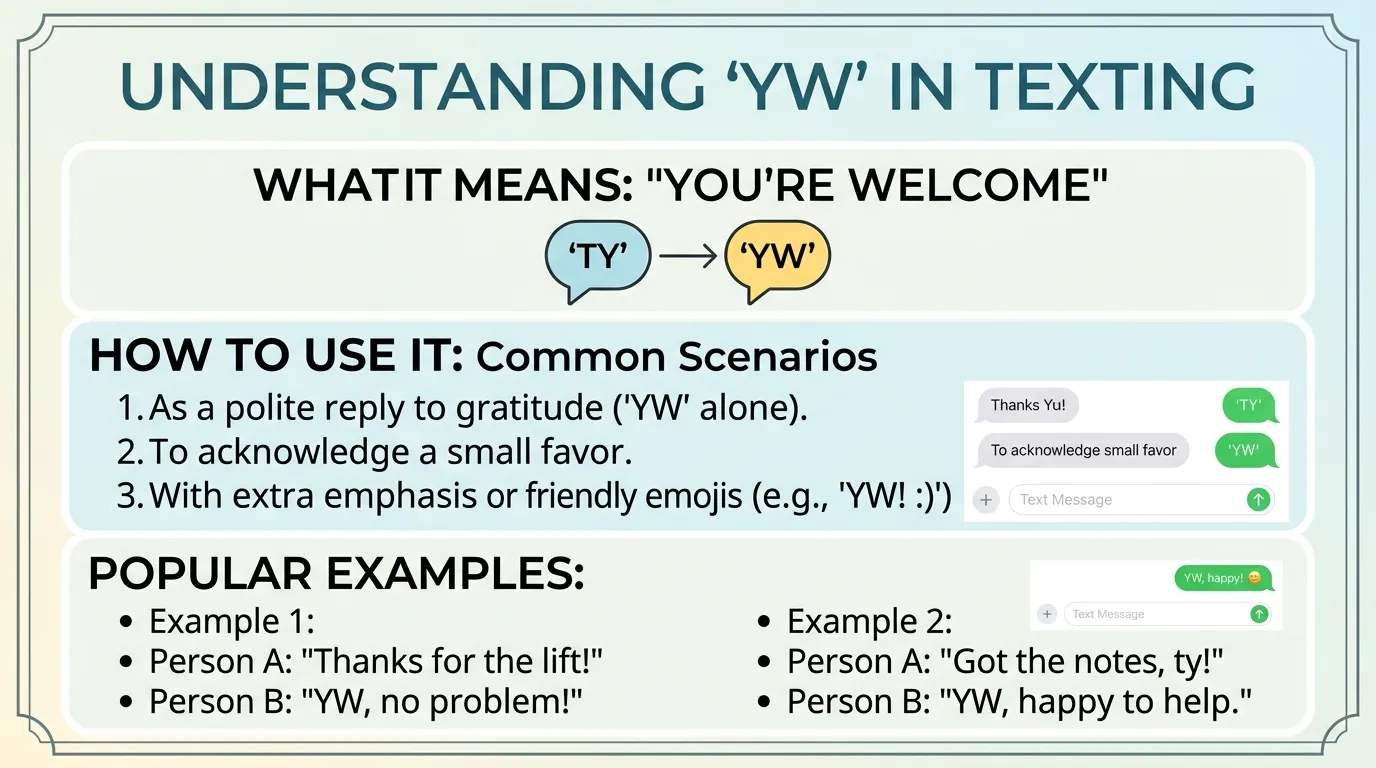
So, what does YW mean in text? Simply put, YW stands for “You’re Welcome.” It is a quick and casual response people use after someone says “thank you” or “thanks.”
But there is more to this abbreviation than just two letters. In this guide, we will explore the YW meaning in text, where it came from, how to use it properly, examples in conversations, alternative meanings, common misunderstandings, and frequently asked questions.
Let’s dive in!
What Does YW Mean in Text?
The abbreviation YW most commonly means “You’re Welcome.”
It is a shortened way of replying politely when someone thanks you. Instead of typing the full phrase, people often use YW to save time and keep conversations fast and informal.
Simple Definition
YW = You’re Welcome
It is usually used in:
- Text messages
- Social media chats
- Online gaming
- Messaging apps
- Casual workplace chats
- Group conversations
Example:
Friend: “Thanks for helping me with homework!”
You: “YW 😊”
In this example, YW simply means “You’re welcome.”
The abbreviation helps keep texting quick and effortless.
Why Do People Use YW in Text Messages?
People use texting abbreviations because they are:
- Faster to type
- Convenient
- Common in digital communication
- Informal and friendly
- Easy to understand
Modern messaging culture values speed. Instead of typing complete sentences, users shorten common expressions.
For example:
| Full Phrase | Text Version |
|---|---|
| You’re Welcome | YW |
| Thank You | TY |
| No Problem | NP |
| Laugh Out Loud | LOL |
| Be Right Back | BRB |
Because texting is often casual, abbreviations like YW naturally became popular.
The Origin of YW in Internet Slang
The exact origin of YW is difficult to trace, but it became popular during the rise of:
- Internet chatrooms
- SMS texting
- Instant messaging apps
- Early social media platforms
Back when mobile phones had smaller keyboards and texting limits, abbreviations became essential.
People shortened common phrases to save:
- Time
- Typing effort
- Character space
Just like LOL, OMG, and BRB, YW became part of everyday internet language.
Today, it is commonly used across platforms like:
- Facebook Messenger
- Instagram DMs
- Snapchat
- Discord
- TikTok comments
- X (formerly Twitter)
How Is YW Used in Text?
The most common use of YW happens after someone expresses gratitude.
Basic Conversation Example
Person A: “Thank you for the ride!”
Person B: “YW!”
Friendly Example
Friend: “Thanks for the movie recommendation.”
You: “YW! Hope you enjoy it.”
Casual Social Media Example
Follower: “Thanks for the advice!”
Creator: “YW ❤️”
Workplace Chat Example
Coworker: “Thanks for sending the file.”
You: “YW, happy to help!”
In professional situations, some people may prefer typing the full phrase “You’re welcome” to sound more polished.
Different Ways to Say YW
Although YW means “You’re welcome,” there are many other responses people use after receiving thanks.
Popular Alternatives to YW
1. No Problem (NP)
This is one of the most common alternatives.
Example:
“Thanks!”
“No problem!”
2. Anytime
Shows willingness to help again.
Example:
“Thanks for helping!”
“Anytime!”
3. Happy to Help
A warmer, more professional response.
Example:
“Thanks for explaining everything.”
“Happy to help!”
4. No Worries
Popular in casual conversations.
Example:
“Thanks for waiting.”
“No worries!”
5. My Pleasure
A more polite and formal option.
Example:
“Thank you for your support.”
“My pleasure.”
6. Sure Thing
Friendly and relaxed.
Example:
“Thanks for grabbing coffee.”
“Sure thing!”
Comparison Table
| Response | Formality Level | Best Use |
|---|---|---|
| YW | Casual | Friends & texting |
| You’re Welcome | Neutral | Most situations |
| No Problem | Casual | Everyday chat |
| My Pleasure | Formal | Professional use |
| Anytime | Friendly | Personal relationships |
| Happy to Help | Semi-formal | Workplace |
When Should You Use YW?
Although YW is common, context matters.
Best Situations to Use YW
You can use YW when:
✅ Texting friends
✅ Messaging family
✅ Casual conversations
✅ Social media chats
✅ Informal online communities
Example
Friend: “Thanks for covering for me.”
You: “YW!”
It feels natural and friendly.
When NOT to Use YW
There are situations where typing only YW may seem too casual.
Avoid using YW in:
❌ Job interviews
❌ Formal emails
❌ Business communication
❌ Professional client messages
❌ Academic settings
Better Alternative for Formal Settings
Instead of:
“YW”
Say:
- “You’re welcome.”
- “Happy to help.”
- “It was my pleasure.”
- “Glad I could assist.”
Professional Example
Client: “Thank you for your assistance.”
Better Reply: “You’re welcome. Please let me know if you need anything else.”
This sounds more polished and professional.
YW Meaning Across Different Platforms
The meaning of YW stays mostly the same, but usage varies depending on the platform.
YW on Snapchat
On Snapchat, YW almost always means “You’re Welcome.”
Example:
“Thanks for the snap!”
“YW 😄”
YW on Instagram
In Instagram DMs or comments, people use YW casually.
Example:
“Thanks for following back!”
“YW ❤️”
YW on TikTok
TikTok users may use YW in comment replies.
Example:
“Thanks for the tutorial!”
“YW!”
YW in Gaming
Gamers often use quick abbreviations while chatting.
Example:
“Thanks for the backup!”
“YW bro.”
Fast communication matters in gaming, so shorthand is common.
Can YW Have Other Meanings?
Yes, although “You’re Welcome” is the most popular meaning, YW can occasionally mean different things depending on context.
Less Common Meanings of YW
| Meaning | Context |
|---|---|
| Young Woman | Personal descriptions |
| Yeah Whatever | Informal/slang |
| Yearly Wage | Financial discussions |
| Youth Worker | Job roles |
However, in texting and social media, YW almost always means “You’re Welcome.”
Example of Different Context
HR Discussion:
“What’s your YW?”
Meaning: Yearly Wage
But if someone says:
“Thanks for helping!”
Then YW definitely means “You’re Welcome.”
Context is everything.
Common Misunderstandings About YW
Many people misunderstand texting abbreviations.
Here are some common mistakes:
Mistake 1: Thinking YW Means “Yeah Whatever”
Although possible in rare slang usage, this is uncommon.
In most cases:
YW = You’re Welcome
Mistake 2: Using YW in Formal Emails
Some people use texting shorthand in professional communication.
This may appear unprofessional.
Instead of:
“YW”
Try:
“You’re welcome.”
Mistake 3: Overusing Internet Slang
Using too many abbreviations can confuse people.
For example:
“YW NP LOL BTW”
Some readers may struggle to understand excessive shorthand.
Balance is important.
Popular Text Abbreviations Related to YW
If you are learning internet slang, here are some common abbreviations often used alongside YW.
| Abbreviation | Meaning |
|---|---|
| TY | Thank You |
| TYSM | Thank You So Much |
| LOL | Laugh Out Loud |
| BRB | Be Right Back |
| IMO | In My Opinion |
| IDK | I Don’t Know |
| OMG | Oh My God |
| TBH | To Be Honest |
| NP | No Problem |
| NVM | Never Mind |
Example Conversation
Friend: “TYSM for your help!”
You: “YW 😊”
This feels natural in casual texting.
Real-Life Examples of YW in Text Conversations
Here are some practical examples to help you understand how people use YW naturally.
Example 1: Friends Chat
Friend: “Thanks for inviting me!”
You: “YW!”
Example 2: Family Text
Mom: “Thanks for ordering dinner.”
You: “YW ❤️”
Example 3: School Group Chat
Classmate: “Thanks for sending notes.”
You: “YW!”
Example 4: Online Community
User: “Thanks for answering my question.”
You: “YW 😊 Glad I could help.”
Why Understanding Text Slang Matters
Learning abbreviations like YW improves communication online.
Benefits include:
Better Understanding
You avoid confusion in chats.
Faster Communication
You can text more naturally.
Improved Social Skills Online
You understand internet culture better.
More Confidence
You won’t feel lost when reading messages.
As digital communication grows, knowing text slang becomes increasingly useful.
Is YW Rude?
Usually, YW is not rude.
However, tone and context matter.
Some people may find it:
- Too short
- Slightly impersonal
- Overly casual
Example That Feels Fine
“Thanks!”
“YW 😊”
Friendly emoji = warm tone.
Example That Feels Cold
“Thanks for helping me.”
“YW.”
Without warmth, it can feel abrupt.
Tip
Add friendliness:
- “YW 😊”
- “YW! Anytime.”
- “YW, glad to help!”
Small touches improve tone.
The Future of Texting Abbreviations
Text language constantly evolves.
New slang appears every year, but abbreviations like YW, LOL, and OMG remain popular because they are simple and universally understood.
Even as voice messages and AI communication grow, shorthand texting still saves time.
That means YW meaning in text will likely remain relevant for years.
Frequently Asked Questions (FAQs)
1. What does YW mean in text?
YW means “You’re Welcome.” It is commonly used as a reply after someone says thank you.
2. Is YW rude?
No, YW is generally not rude, but it can seem too casual in formal conversations.
3. What does YW mean on Snapchat?
On Snapchat, YW usually means “You’re Welcome.”
4. Can YW mean something else?
Yes, in rare contexts it may mean Young Woman, Yeah Whatever, or Yearly Wage, but texting usually refers to “You’re Welcome.”
5. Should I use YW in work emails?
No. In professional communication, it is better to type “You’re welcome” fully.
6. What is another way to say YW?
You can say:
- No problem
- Anytime
- Happy to help
- No worries
- My pleasure
7. Is YW still popular?
Yes, YW remains widely used in texting, messaging apps, and social media.
Final Thoughts
Understanding the YW meaning in text is simple but useful in today’s digital world. In most cases, YW stands for “You’re Welcome” and acts as a quick, friendly reply when someone thanks you.
While it works perfectly in casual conversations, remember to adjust your communication style based on the situation. YW is ideal for texting friends and social media chats, but full phrases are better for professional settings.
To communicate more naturally online:
- Learn common text abbreviations
- Understand context clues
- Match your tone to the conversation
- Avoid overusing slang in formal situations
The next time someone texts “TY” or “Thanks!”, you’ll know exactly when to reply with a quick and confident “YW!” 😊

I’m a language-focused blogger from the United States, and I write about modern texting habits and online expressions. My goal is to help readers stay up to date with constantly evolving digital slang by sharing accurate meanings, practical usage tips, and real conversational examples.