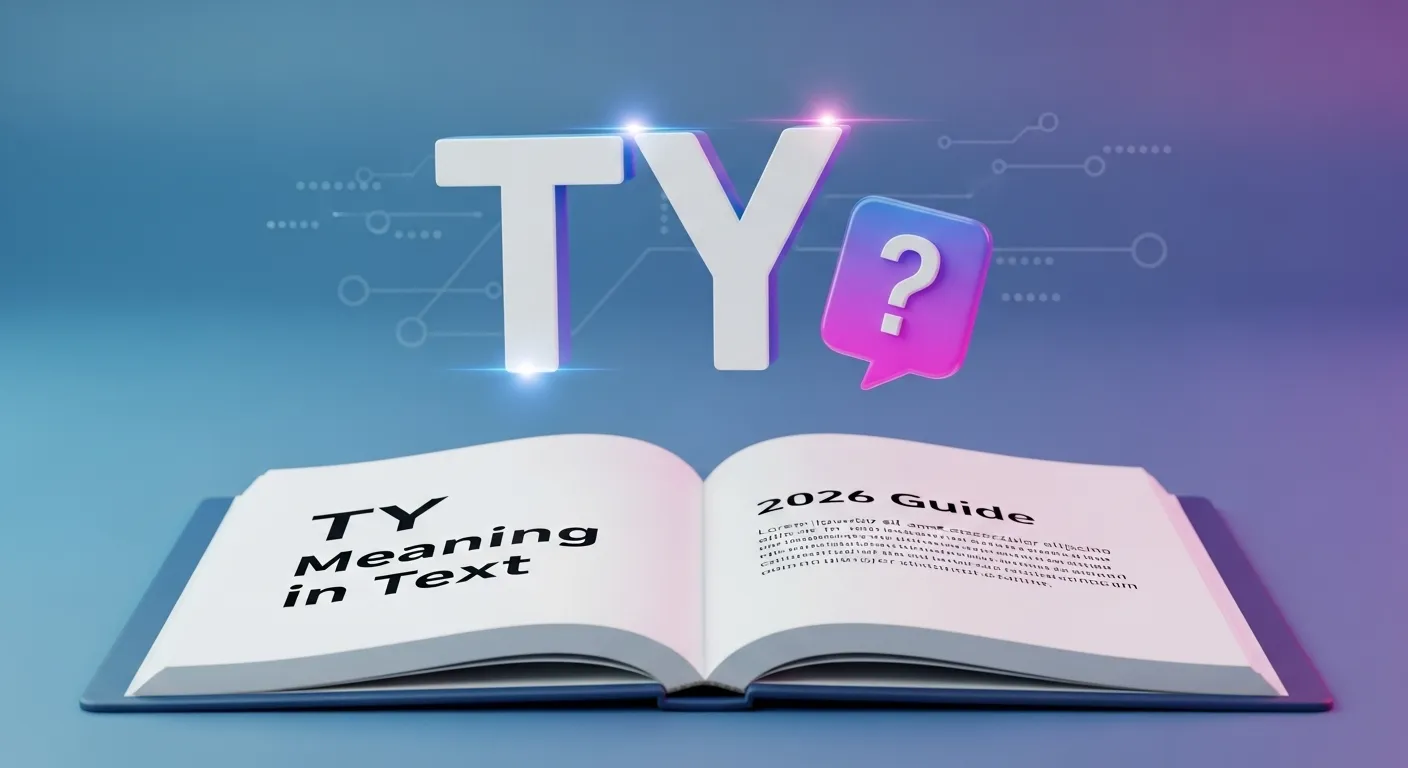
In today’s fast-paced digital world, communication has become quicker, shorter, and more expressive than ever. Whether you’re texting friends, chatting on social media, or sending quick replies at work, abbreviations are everywhere. One of the most commonly used is “TY”. But what exactly does “TY meaning in text” refer to, and why is it so popular?
In this comprehensive guide, we’ll explore everything you need to know about TY in text messages, including its meaning, origins, usage examples, alternatives, and when it’s appropriate (or not). By the end, you’ll have a clear understanding of how to use it confidently in your daily conversations.
📌 What Does “TY” Mean in Text?
At its core, “TY” simply means “Thank You.”
It’s a shorthand abbreviation used in digital communication to quickly express gratitude without typing out the full phrase.
✅ Simple Definition:
- TY = Thank You
📱 Where You’ll See It:
- Text messages (SMS)
- WhatsApp chats
- Social media (Facebook, Instagram, X)
- Online gaming chats
- Emails (informal)
🤔 Why Do People Use “TY” Instead of “Thank You”?
The main reason is speed and convenience. In the digital age, people prefer quick and efficient communication.
🔑 Key Reasons:
- Saves time ⏱️
- Casual tone 😊
- Common in fast chats
- Widely understood
💡 Example:
Instead of typing:
“Thank you for sending the file.”
People often write:
“TY for sending the file!”
🧠 The Evolution of Text Abbreviations
The use of abbreviations like “TY” didn’t just appear overnight—it evolved alongside technology.
📜 Brief History:
- Early SMS (1990s–2000s):
- Limited character count (160 characters)
- Users shortened words to save space
- Chatrooms & Forums:
- Faster typing needed for real-time conversations
- Modern Messaging Apps:
- Abbreviations remain due to habit and speed
🧾 Similar Early Abbreviations:
- LOL = Laugh Out Loud
- BRB = Be Right Back
- OMG = Oh My God
💬 How to Use “TY” in Text (With Examples)
Using “TY” is simple, but context matters.
👍 Casual Conversations:
- “TY for your help!”
- “TY 😊”
- “TY so much!”
🎮 Gaming:
- “TY for the backup!”
- “TY team!”
📱 Social Media:
- “TY everyone for the support ❤️”
⚠️ When NOT to Use “TY”
While “TY” is convenient, it’s not always appropriate.
🚫 Avoid Using TY In:
- Formal emails
- Job applications
- Professional communication
- Academic writing
❌ Example (Not Recommended):
“TY for considering my application.”
✅ Better Alternative:
“Thank you for considering my application.”
🔄 Variations and Related Abbreviations
There are several variations of “TY” depending on tone and emphasis.
🔤 Common Variations:
- TYSM = Thank You So Much
- THX / THNX = Thanks
- TYVM = Thank You Very Much
- TYSVM = Thank You So Very Much
📊 Comparison Table:
| Abbreviation | Meaning | Tone |
|---|---|---|
| TY | Thank You | Neutral |
| TYSM | Thank You So Much | Warm |
| THX | Thanks | Casual |
| TYVM | Thank You Very Much | Slightly formal |
| TYSVM | Thank You So Very Much | Very expressive |
🗣️ Alternatives to “TY” in Text
Sometimes you may want to switch things up or sound more expressive.
✨ Alternatives:
- Thanks!
- Many thanks
- Appreciate it
- Much appreciated
- Grateful 🙏
💡 Example:
Instead of:
“TY for helping me”
You could say:
“I really appreciate your help!”
🧍♂️ Tone and Context: Why It Matters
Using “TY” correctly depends heavily on tone and relationship.
👥 With Friends:
- Totally fine
- Feels natural and friendly
🧑💼 With Colleagues:
- Okay in informal chats
- Avoid in official communication
❤️ In Personal Messages:
- Can feel slightly impersonal if overused
🌍 Cultural and Generational Differences
Not everyone uses or understands “TY” the same way.
👶 Younger Generations:
- Use abbreviations frequently
- Prefer speed and brevity
👴 Older Generations:
- May prefer full phrases
- See abbreviations as less polite
🌐 Global Usage:
- Widely understood in English-speaking digital spaces
- May confuse non-native speakers
🤯 Common Misunderstandings About “TY”
Even simple abbreviations can cause confusion.
❗ Misconceptions:
- It’s rude → Not true, just casual
- It’s unprofessional everywhere → Only in formal contexts
- Everyone understands it → Not always
🧪 Real-Life Scenarios
📌 Scenario 1: Friend Chat
“TY for the ride today!”
✔ Perfect usage
📌 Scenario 2: Workplace Chat App
“TY for updating the report.”
✔ Acceptable if informal
📌 Scenario 3: Job Email
“TY for your time.”
❌ Too casual
✔ Use full “Thank you”
🧩 Tips for Using “TY” Effectively
To make the most of this abbreviation, follow these practical tips:
✅ Do:
- Use in casual chats
- Pair with emojis for warmth 😊
- Use with friends and peers
❌ Don’t:
- Use in formal writing
- Overuse it (can feel lazy)
- Assume everyone understands it
❓ FAQs About “TY Meaning in Text”
1. What does TY mean in texting?
TY means “Thank You.” It’s a quick way to express gratitude in digital communication.
2. Is TY rude or impolite?
No, it’s not rude. It’s simply informal. However, in formal situations, it may seem too casual.
3. Can I use TY in professional emails?
It’s best to avoid it. Use “Thank you” instead for professionalism.
4. What is the difference between TY and THX?
Both mean “thanks,” but:
- TY = Thank You
- THX = Thanks
THX is slightly more casual.
5. What does TYSM mean?
TYSM stands for “Thank You So Much.” It expresses stronger gratitude.
6. Is TY commonly used worldwide?
It’s widely used in English-speaking digital communication but may not be understood everywhere.
7. Should I use TY with emojis?
Yes! Adding emojis like 😊 or 🙏 makes it feel warmer and more personal.
🏁 Conclusion: Should You Use “TY” in Text?
The abbreviation “TY” is a simple yet powerful way to express gratitude quickly in digital communication. It reflects the evolving nature of language in our fast-paced world.
🔑 Key Takeaways:
- TY = Thank You
- Best for casual conversations
- Avoid in formal or professional settings
- Use variations like TYSM for emphasis
- Always consider tone and audience
💡 Final Tip:
If you’re unsure, go with the full phrase “Thank you.” It’s always safe, polite, and universally understood.

I’m a language-focused blogger from the United States, and I write about modern texting habits and online expressions. My goal is to help readers stay up to date with constantly evolving digital slang by sharing accurate meanings, practical usage tips, and real conversational examples.