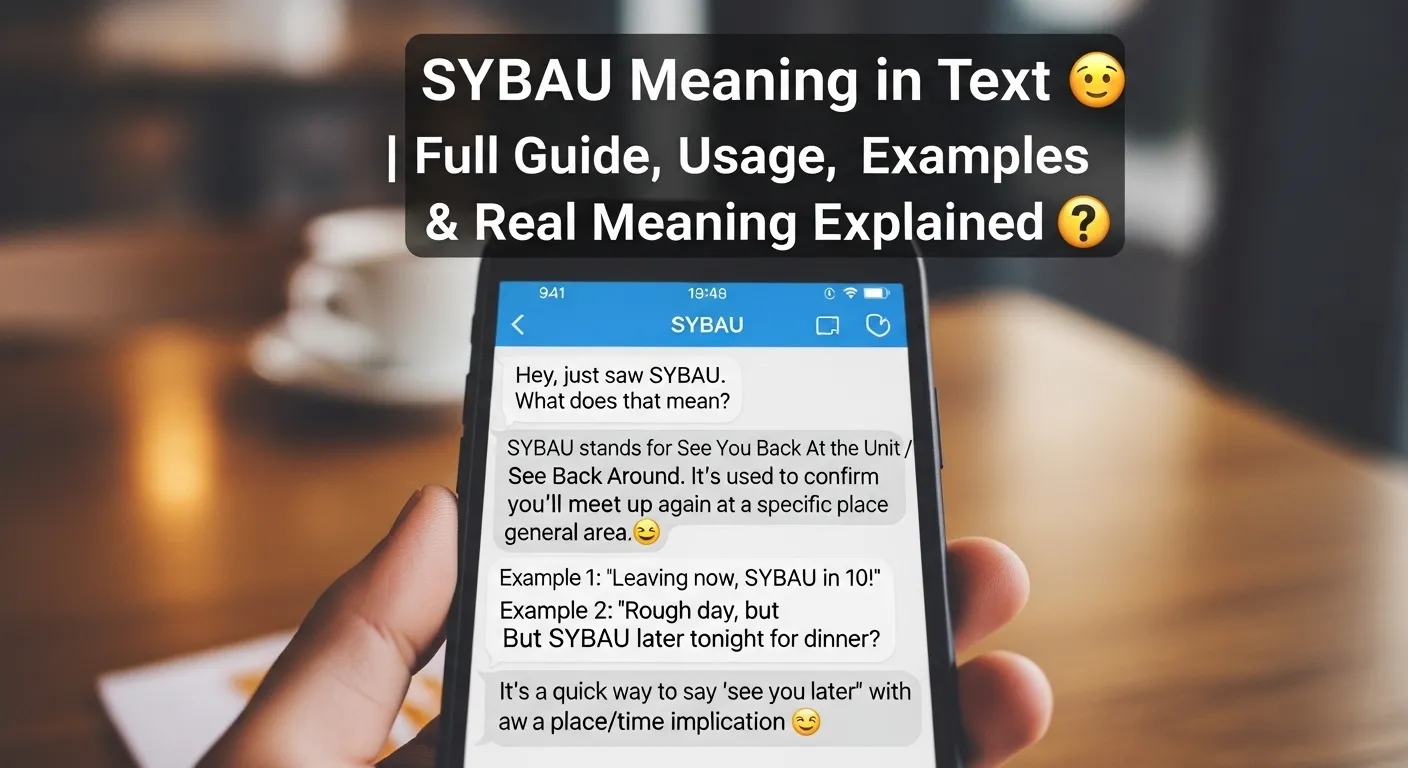
In today’s digital world, texting slang and internet abbreviations are everywhere. From Snapchat to TikTok comments, new short forms appear almost daily. One of the trending and slightly confusing acronyms people are searching for is “SYBAU meaning in text”.
If you’ve seen SYBAU in a chat, comment, or meme and felt confused, you’re not alone. Many users encounter it without knowing what it stands for or how strong its tone can be. Understanding slang like this is important because it helps you avoid misunderstandings, especially in online conversations where tone is hard to judge.
In this article, we’ll break down the exact meaning of SYBAU, its usage, tone, examples, alternatives, and whether you should use it or avoid it. Everything is explained in a simple, friendly way so anyone can understand it easily.
What Does SYBAU Mean in Text? (Simple Definition)
The most commonly accepted meaning of SYBAU in texting and internet slang is:
SYBAU = “Shut Your B*tch A Up”**
Yes, it is a very strong and offensive slang expression used to tell someone to be quiet in a rude or angry way.
Key points about SYBAU:
- It is an internet slang acronym
- It is considered highly offensive
- It is used mainly in heated arguments or online fights
- It appears frequently on platforms like TikTok, Snapchat, Instagram, and gaming chats
Because of its aggressive tone, SYBAU is not suitable for polite conversation or professional communication.
Where Did SYBAU Come From? (Origin & Popularity)
Unlike formal words, SYBAU did not originate from dictionaries or official language sources. It emerged from internet culture and social media slang evolution.
Its rise in popularity is linked to:
- TikTok comment sections
- Twitter/X arguments
- Online gaming chats
- Meme culture and reaction videos
People often shorten longer phrases into acronyms for speed and impact. SYBAU became popular because:
- It is quick to type
- It delivers a strong emotional reaction
- It is used in humorous or angry exchanges
Over time, it spread across different platforms and became part of modern internet slang.
How SYBAU Is Used in Conversations 💬
SYBAU is typically used when someone is:
- Angry or frustrated
- Responding to insults
- Engaged in online arguments
- Trying to shut down a conversation aggressively
Example Conversations:
Example 1: Argument online
- Person A: “Your opinion makes no sense.”
- Person B: “SYBAU bro, nobody asked you.”
Example 2: Gaming chat
- Player 1: “You’re so bad at this game.”
- Player 2: “SYBAU and play the match.”
Example 3: Social media comment
- Comment: “This video is cringe.”
- Reply: “SYBAU, scroll away then.”
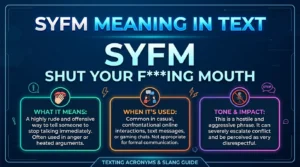
Tone & Meaning Behind SYBAU ⚠️
Even though SYBAU is just an acronym, its meaning carries a strong emotional tone.
It usually expresses:
- Disrespect
- Anger
- Frustration
- Defensiveness
Important note:
Unlike casual slang like “lol” or “brb,” SYBAU is not friendly or neutral. It is closer to an insult than a joke, even if some people use it jokingly among friends.
Is SYBAU Always Offensive? 🤔
Yes, in most contexts, SYBAU is considered offensive. However, internet culture sometimes changes how words feel depending on context.
It may be used in two ways:
1. Serious insult (most common)
Used during arguments to shut someone down aggressively.
2. Joke between friends (rare)
Some friends use it jokingly, but this depends on mutual understanding.
👉 Even in joking cases, it can still be misunderstood easily.
Why SYBAU Became Popular on TikTok & Social Media 📱
Social media platforms like TikTok and Instagram have a huge role in spreading slang acronyms like SYBAU.
Reasons for popularity:
- Short attention spans → people prefer abbreviations
- Meme culture → exaggerated expressions are entertaining
- Viral comments → slang spreads quickly through repetition
- Gaming communities → fast typing during matches
SYBAU fits perfectly into fast-paced online communication where emotions are expressed quickly.
Alternatives to SYBAU (Safer Options) 😊
If you want to express frustration without being offensive, there are many better alternatives.
Polite alternatives:
- “Please stop talking”
- “Let’s agree to disagree”
- “I don’t want to argue”
- “Calm down”
- “Drop it”
Slang alternatives (less harsh):
- “STFU” (still offensive but commonly used slang)
- “Be quiet”
- “Chill”
- “Enough”
👉 Choosing the right words helps avoid unnecessary conflict online.
SYBAU vs Other Similar Slang Terms
Here’s a quick comparison of SYBAU with similar internet slang:
| Acronym | Full Form | Tone | Usage |
|---|---|---|---|
| SYBAU | Shut Your B*h A Up | Very offensive | Arguments, insults |
| STFU | Shut The F*** Up | Offensive | Angry replies |
| SHUSH | Shush | Neutral | Light teasing |
| BE QUIET | Be quiet | Neutral | Polite request |
As you can see, SYBAU is one of the strongest forms in this category.
Common Misunderstandings About SYBAU ❌
Many people misunderstand what SYBAU means when they first see it.
Misconception 1: It has a harmless meaning
❌ Wrong — It is not a cute or friendly acronym.
Misconception 2: It is a brand or name
❌ Wrong — It is not related to any company or organization.
Misconception 3: It is always a joke
❌ Not always — context matters a lot.
Misconception 4: It is safe to use anywhere
❌ Wrong — it can offend people easily.
Should You Use SYBAU? (Important Advice)
While SYBAU is popular online, it is not recommended for general use.
You should avoid using it if:
- You are talking to strangers
- You are in a professional environment
- You are trying to resolve a conflict
- You don’t know the other person well
You might see it used in:
- Gaming chats
- Meme pages
- Friendly banter (carefully)
👉 In most real-life situations, it is better to avoid it completely.
Real-Life Examples of SYBAU in Internet Culture
To better understand how SYBAU appears online, here are some realistic scenarios:
Example 1: TikTok comment section
A viral video gets mixed reactions, and heated comments appear:
- “This is the worst take ever”
- “SYBAU you don’t even know the context”
Example 2: Gaming frustration
During an intense match:
- “You ruined the game”
- “SYBAU, you’re worse than me”
Example 3: Meme reaction
Under a controversial meme:
- “This is not funny at all”
- “SYBAU it’s just a joke bro”
These examples show how quickly tone can escalate online.
Why Understanding SYBAU Meaning Matters 🧠
Knowing the meaning of slang like SYBAU is important because:
- It helps you understand online conversations
- It prevents misinterpretation
- It protects you from responding incorrectly
- It improves your digital communication skills
Internet language evolves quickly, and staying updated helps you stay aware of what people really mean.
FAQs About SYBAU Meaning in Text
1. What does SYBAU mean in texting?
SYBAU stands for “Shut Your B*h A Up,” a slang insult used in online conversations.
2. Is SYBAU a bad word?
Yes, it is considered offensive and rude in most contexts.
3. Where is SYBAU commonly used?
It is mostly used on TikTok, Snapchat, Instagram, and gaming chats.
4. Is SYBAU ever used in a friendly way?
Sometimes among close friends jokingly, but it can still be misinterpreted.
5. What should I say instead of SYBAU?
You can use polite alternatives like “please stop,” “calm down,” or “let’s not argue.”
6. Is SYBAU the same as STFU?
They are similar in meaning, but SYBAU is generally considered more aggressive.
7. Why do people use SYBAU online?
Because it is short, expressive, and conveys strong emotion quickly.
Conclusion
The acronym SYBAU meaning in text is a strong and offensive internet slang term that stands for “Shut Your B*h A Up.” While it is widely used in online arguments, gaming chats, and social media platforms, it carries a harsh tone that can easily offend others.
Understanding SYBAU helps you:
- Recognize its meaning in conversations
- Avoid misunderstandings online
- Choose better communication styles
Final tip:
If you’re unsure whether to use SYBAU, it’s usually better not to. Clear, respectful communication always works better than aggressive slang in the long run.

I’m a U.S.-based digital culture writer who specializes in modern text slang, social media language, and online communication trends. After years of researching how language evolves in texting and messaging apps, I break down confusing abbreviations into clear, easy-to-understand explanations for everyday readers.