In today’s fast-paced digital world, texting slang evolves constantly—and understanding it can make or break your conversations. One abbreviation you’ve probably seen (or even used) is STFU. But what does it really mean, and should you use it?
In this guide, we’ll break down the STFU meaning in text, its origins, tone, usage, and better alternatives—so you can communicate confidently without offending anyone.
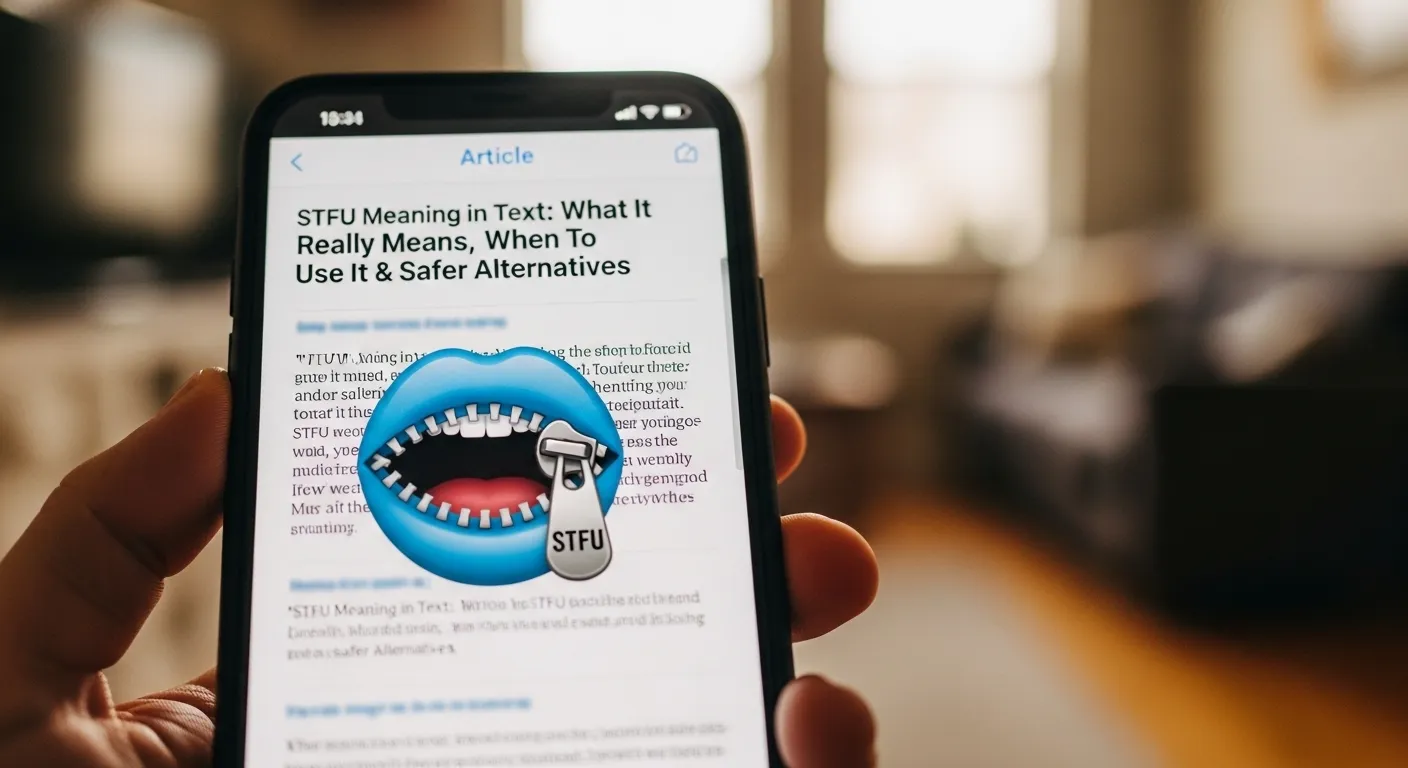
What Does STFU Mean in Text?
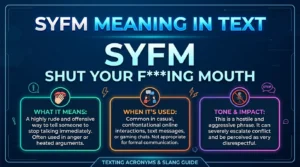
STFU stands for:
“Shut The F* Up”**
It’s a strong and often rude expression used to tell someone to stop talking immediately.
Quick Definition
- STFU (acronym): A blunt, sometimes aggressive way to tell someone to be quiet.
Why Is STFU So Popular in Texting?
The rise of texting and social media has shortened how we communicate. Abbreviations like STFU are popular because they are:
- Fast and efficient
- Emotionally expressive
- Widely understood in internet culture
However, popularity doesn’t always mean it’s appropriate.
Different Meanings Based on Tone
Interestingly, STFU doesn’t always carry the same intensity. Context matters a lot.
1. Aggressive Meaning (Most Common)
Used in anger or frustration.
Example:
- “STFU, I don’t want to hear it anymore.”
👉 This is clearly rude and confrontational.
2. Playful or Sarcastic Meaning
Among close friends, it can sometimes be joking.
Example:
- “No way you met a celebrity?! STFU 😂”
👉 Here, it means “I can’t believe it!” rather than actual anger.
3. Shock or Excitement
Used to express disbelief.
Example:
- “You won the lottery? STFU!”
👉 This shows surprise, not hostility.
When Should You Use STFU? (And When NOT To)
Knowing when to use STFU is crucial to avoid misunderstandings.
✅ Okay to Use (Carefully)
- With close friends who understand your humor
- In joking or playful conversations
- When tone is clearly lighthearted (often with emojis)
❌ Avoid Using STFU
- In professional or workplace communication
- With strangers or acquaintances
- During serious discussions
- In family conversations (depending on culture)
👉 Using STFU in the wrong context can damage relationships or make you seem disrespectful.
Real-Life Examples of STFU in Text Conversations
Example 1: Friendly Banter
Friend 1: I just got free concert tickets
Friend 2: STFU no way 😂
👉 Meaning: “I’m shocked!”
Example 2: Argument
Person A: You always do this
Person B: STFU, you don’t know anything
👉 Meaning: Clearly rude and confrontational
Example 3: Gaming Chat
Player 1: Stop messing up the game
Player 2: STFU and play
👉 Often toxic behavior in online gaming
Is STFU Considered Offensive?
Yes—in most situations, STFU is offensive.
Why?
- It includes a profanity (F-word)
- It’s commanding and dismissive
- It can feel disrespectful or aggressive
Even if you don’t mean harm, the receiver might interpret it negatively.
Safer Alternatives to STFU
If you want to avoid sounding rude, here are better options:
Polite Alternatives
- “Can you please be quiet for a moment?”
- “Let’s pause this conversation”
- “I need a little silence right now”
Casual & Friendly Alternatives
- “Chill for a second 😄”
- “Hold on a sec”
- “Wait, listen!”
Funny Alternatives
- “Zip it 😜”
- “Mute button activated 😂”
- “Shhh, plot twist coming!”
STFU vs Similar Text Slang
Here’s how STFU compares to other common abbreviations:
| Slang | Meaning | Tone |
|---|---|---|
| STFU | Shut The F*** Up | Harsh / Playful (context-based) |
| GTFO | Get The F*** Out | Shock or anger |
| IDC | I Don’t Care | Dismissive |
| LOL | Laugh Out Loud | Friendly |
| OMG | Oh My God | Excited |
👉 STFU is among the stronger and more aggressive slang terms.
The History and Origin of STFU
STFU originated in early internet culture and online forums.
Timeline:
- 1990s–2000s: Emerged in chat rooms and forums
- Early 2000s: Popular in online gaming communities
- 2010s–Present: Spread across social media platforms like texting apps, memes, and comment sections
Its widespread use reflects how internet culture embraces bold and expressive language.
Cultural and Social Considerations
Not everyone interprets STFU the same way.
Factors that influence meaning:
- Age group (younger users may use it casually)
- Cultural background (some cultures see it as very disrespectful)
- Relationship (friends vs strangers)
- Platform (gaming chat vs workplace email)
👉 Always consider who you’re talking to before using it.
Psychological Impact of Using Harsh Text Slang
Words carry emotional weight—even in texts.
Using harsh slang like STFU can:
- Create conflict or tension
- Hurt someone’s feelings
- Make communication feel hostile
On the other hand, using softer language:
- Builds trust and respect
- Improves communication
- Prevents misunderstandings
Common Misunderstandings About STFU
❌ “It’s always a joke”
Not true—many people find it offensive.
❌ “Everyone uses it casually”
Usage varies widely depending on culture and personality.
❌ “It’s harmless in texting”
Tone is harder to interpret in text, so it can easily be misread.
How to Respond If Someone Says STFU to You
Your response depends on context:
If It’s a Joke
- Laugh it off
- Respond playfully: “Rude 😂”
If It’s Rude
- Stay calm
- Say: “That was unnecessary”
- Set boundaries if needed
If You’re Unsure
- Ask: “Are you serious or joking?”
Tips for Using Text Slang Responsibly
- Know your audience
- Consider tone and context
- Avoid overusing harsh slang
- Use emojis to soften tone
- When in doubt, choose polite wording
FAQs About STFU Meaning in Text
1. Is STFU always rude?
Not always—but in most cases, it is considered rude unless clearly used jokingly among close friends.
2. What does STFU mean in a funny way?
It can mean “I can’t believe it” or “you’re kidding,” especially when paired with emojis like 😂.
3. Can I use STFU in professional settings?
No, it’s highly inappropriate for work or formal communication.
4. Is STFU worse than “shut up”?
Yes, because it includes profanity, making it more intense and offensive.
5. Why do people say STFU in games?
In gaming, it’s often used during frustration—but it contributes to toxic behavior.
6. What should I say instead of STFU?
Try:
- “Please be quiet”
- “Hold on”
- “Let me finish”
7. Is STFU common among teenagers?
Yes, teenagers often use it casually, but that doesn’t mean it’s always appropriate.
Final Thoughts: Should You Use STFU?
Understanding the STFU meaning in text is essential in today’s digital communication. While it’s widely used, it’s also one of the more aggressive slang terms out there.
Key Takeaways
- STFU means “Shut The F* Up”**
- Tone depends heavily on context and relationship
- It can be funny, sarcastic, or offensive
- Often best avoided in formal or sensitive situations
Actionable Advice
- Use STFU only with people who understand your tone
- When unsure, choose a polite alternative
- Remember: respectful communication always wins

I’m a content editor and language researcher based in California with a focus on texting terminology, internet slang, and Gen Z communication styles. Through my writing, I help readers understand what popular text phrases mean, how they’re used, and when they fit naturally into casual conversations.