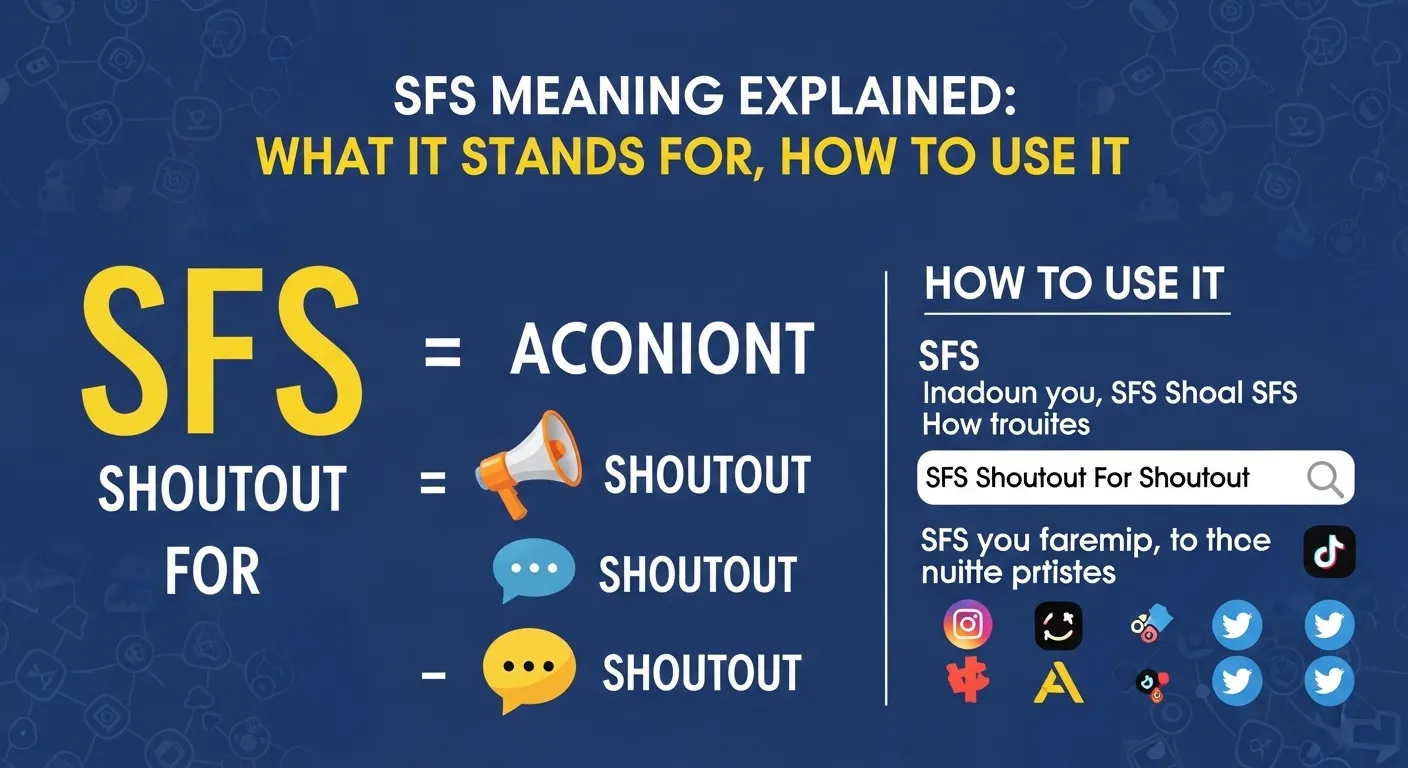
In today’s fast-moving digital world, abbreviations like SFS are everywhere. Whether you’re scrolling through Instagram, chatting on Snapchat, or browsing TikTok, you’ve probably come across this term. But what exactly does it mean?
Understanding SFS meaning is important because it helps you communicate better online, grow your social presence, and avoid confusion. In this guide, we’ll break down everything you need to know about SFS, including its meanings, uses, examples, and common misunderstandings.
What Does SFS Mean? (Simple Definition)
SFS most commonly stands for:
👉 Shoutout for Shoutout
This means two users agree to promote each other’s profiles or content to their audiences.
Basic Idea:
- You promote someone → They promote you back
- It’s a mutual exchange of visibility
Where Is SFS Used?
SFS is widely used across social media platforms, especially:
- Snapchat
- TikTok
- Twitter (X)
Typical Situations:
- Growing followers
- Promoting small businesses
- Supporting friends’ accounts
- Increasing engagement
How SFS Works (Step-by-Step)
Here’s how a typical SFS exchange works:
- User A posts “SFS?” on their story or DM
- User B agrees
- Both users:
- Share each other’s profile, post, or story
- Tag or mention each other
- Followers from both sides discover new accounts
Example:
“SFS? DM me 💬”
or
“Doing SFS! Must have 1k+ followers”
Different Meanings of SFS (Context Matters)
Although Shoutout for Shoutout is the most popular meaning, SFS can have other meanings depending on context.
1. Shoutout for Shoutout (Most Common)
Used in social media growth and promotion.
2. Snap for Snap
- Used mainly on Snapchat
- Means exchanging snaps to build streaks or engagement
3. Spam for Spam
- Less common
- Users spam likes/comments on each other’s posts
4. Sorry for Spam
- Used when someone posts too many stories or messages
SFS Meaning in Texting vs Social Media
| Platform | Meaning | Purpose |
|---|---|---|
| Shoutout for Shoutout | Gain followers | |
| Snapchat | Snap for Snap | Increase streaks |
| TikTok | Shoutout for Shoutout | Boost views |
| Text Messages | Sorry for Spam | Apologizing for messages |
Why Do People Use SFS?
SFS is popular because it offers quick growth and exposure.
Key Benefits:
- 📈 Gain followers fast
- 🤝 Build online connections
- 📣 Promote content or business
- 💬 Increase engagement (likes, comments, shares)
Real-Life Examples of SFS
Example 1: Instagram Story
“SFS! Send me a screenshot after sharing 🔥”
Example 2: Snapchat
“SFS? Let’s grow streaks!”
Example 3: TikTok
“Doing SFS with active creators only 💯”
Is SFS Safe to Use?
Generally, yes—but there are a few things to keep in mind.
Do:
- ✔ Choose accounts with real followers
- ✔ Check content quality before promoting
- ✔ Set clear rules (time, type of post)
Don’t:
- ❌ Exchange with spam or fake accounts
- ❌ Overuse SFS (can look desperate)
- ❌ Share personal information
Common Mistakes & Misunderstandings
❌ Thinking SFS Always Means One Thing
It can vary based on platform and context.
❌ Expecting Huge Growth Instantly
SFS helps, but it’s not a magic solution.
❌ Ignoring Audience Relevance
Promoting unrelated accounts may reduce engagement.
Alternatives to SFS (Other Growth Strategies)
If SFS isn’t your style, try these:
1. Collaborations
Work with creators in your niche.
2. Hashtags
Use trending and niche hashtags for visibility.
3. Content Quality
Focus on high-value, engaging posts.
4. Giveaways
Encourage users to follow and share.
5. Influencer Marketing
Partner with bigger accounts.
SFS vs Other Similar Terms
| Term | Meaning | Difference |
|---|---|---|
| SFS | Shoutout for Shoutout | Mutual promotion |
| F4F | Follow for Follow | Follow exchange |
| L4L | Like for Like | Like exchange |
| C4C | Comment for Comment | Comment exchange |
When Should You Use SFS?
SFS works best when:
- You’re starting a new account
- You want quick exposure
- You collaborate with similar niches
- Your content is ready to impress new viewers
When Should You Avoid SFS?
Avoid SFS if:
- Your audience is already well-established
- You want organic growth only
- The other account has poor-quality content
- It doesn’t align with your brand
Tips to Use SFS Effectively
💡 Smart Strategies:
- Partner with similar-sized accounts
- Use clear captions (e.g., “24-hour SFS only”)
- Post at peak engagement times
- Track results (followers gained)
FAQs About SFS Meaning
1. What does SFS mean in Instagram?
It usually means Shoutout for Shoutout, where users promote each other.
2. What does SFS mean in Snapchat?
It can mean Snap for Snap or Shoutout for Shoutout, depending on context.
3. Is SFS a good way to grow followers?
Yes, but only when done strategically with relevant accounts.
4. Can SFS harm your account?
Overusing it or partnering with low-quality accounts can reduce credibility.
5. Is SFS better than organic growth?
No—organic growth is more sustainable, but SFS can give a quick boost.
6. How do I ask for SFS?
Simply post or message:
“SFS?” or “Anyone up for SFS?”
7. Do influencers use SFS?
Smaller influencers do, but larger ones prefer paid promotions or collaborations.
Final Thoughts
Understanding SFS meaning helps you navigate social media smarter. It’s a powerful tool for visibility, engagement, and networking—but only when used wisely.
✅ Key Takeaways:
- SFS = Shoutout for Shoutout
- It’s a mutual promotion strategy
- Works best with relevant and active accounts
- Should be used strategically, not excessively

I’m a content editor and language researcher based in California with a focus on texting terminology, internet slang, and Gen Z communication styles. Through my writing, I help readers understand what popular text phrases mean, how they’re used, and when they fit naturally into casual conversations.