In today’s fast-moving digital world, text abbreviations and internet slang appear everywhere — from TikTok captions and Snapchat streaks to group chats and Twitter/X posts. One abbreviation you’ve probably seen online is “PSA.” But what exactly does it mean, and how should you use it?
Understanding the PSA meaning in text is important because it helps you better understand online conversations, social media culture, and modern internet communication. Whether someone posts a “PSA” on Instagram, sends one in a group chat, or uses it jokingly in memes, the term carries a specific purpose and tone.
In this guide, you’ll learn:
- The exact PSA meaning in texting
- What PSA stands for
- How people use PSA online
- Examples from social media and chats
- Different meanings depending on context
- Common misunderstandings
- Similar slang and alternatives
- FAQs about PSA in text messages
Let’s dive in.
What Does PSA Mean in Text?
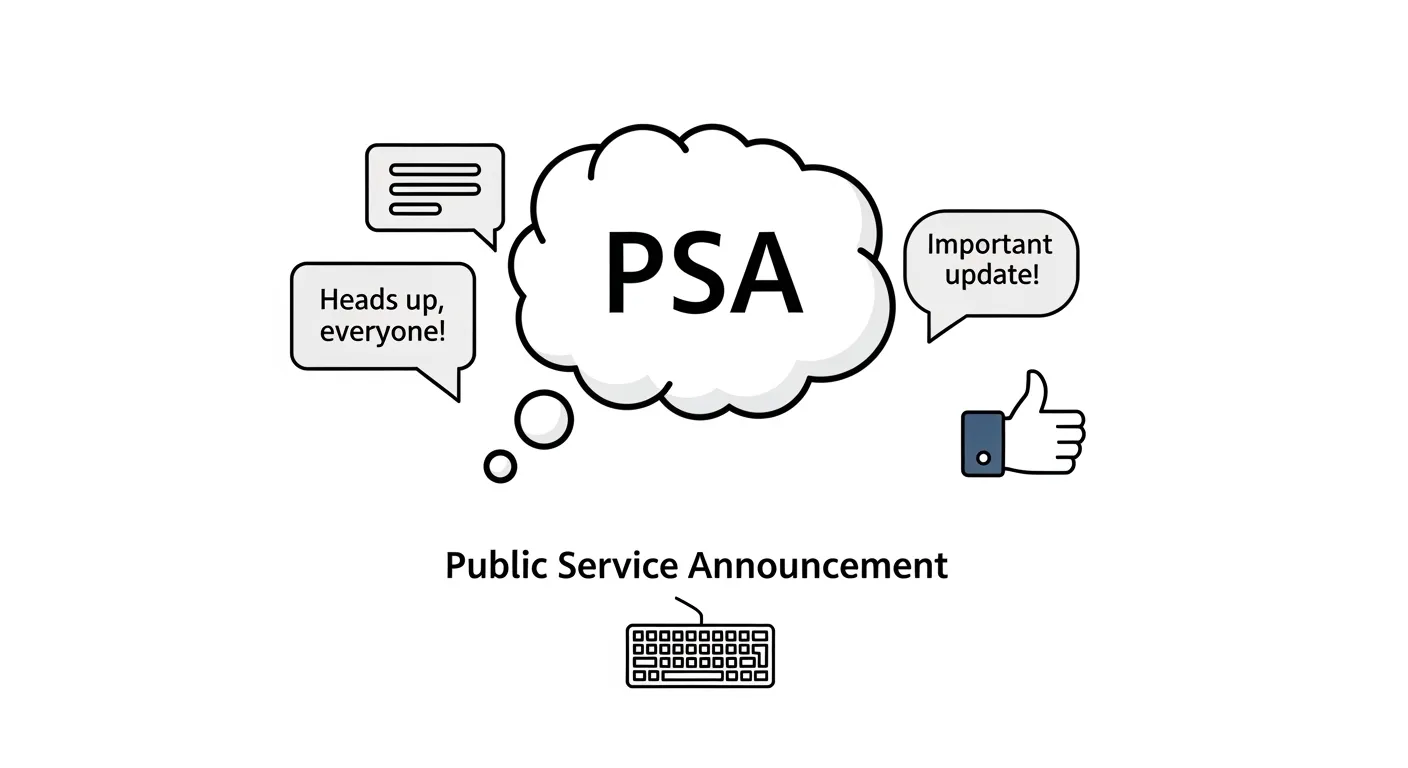
The abbreviation PSA stands for:
Public Service Announcement
In texting and online communication, PSA is commonly used when someone wants to share important information, advice, warnings, reminders, or opinions with a group of people.
Originally, the phrase came from official television or radio announcements meant to inform the public about safety or community issues. Over time, internet users adopted the term humorously and casually in digital conversations.
Today, PSA can be serious, helpful, sarcastic, or funny depending on the context.
Simple Definition of PSA in Texting
Here’s a quick and easy definition:
| Term | Meaning |
|---|---|
| PSA | Public Service Announcement |
| Used For | Sharing important information or advice |
| Tone | Serious, helpful, humorous, or sarcastic |
| Common Platforms | TikTok, Instagram, Snapchat, Discord, Twitter/X, texting apps |
How PSA Is Used in Text Messages
When someone uses PSA in a text, they’re usually introducing information they think others should know.
It often appears at the beginning of a sentence or statement.
Examples of PSA in Text
Serious Example
- “PSA: The roads are icy today, so drive carefully.”
Friendly Reminder
- “PSA: Mother’s Day is this weekend.”
Funny Example
- “PSA: Don’t text your ex after midnight.”
Social Media Style
- “PSA: Drinking water actually fixes half your problems.”
In all these cases, the speaker is making an announcement intended for a wider audience.
The Origin of PSA
To fully understand the PSA meaning in text, it helps to know where the term came from.
Traditional Meaning
Before the internet popularized slang abbreviations, PSA referred to official public messages broadcast on TV, radio, or in newspapers.
These announcements usually focused on:
- Health awareness
- Public safety
- Emergency alerts
- Community education
For example:
- Anti-smoking campaigns
- Seatbelt reminders
- Fire safety announcements
These were called Public Service Announcements because they served the public interest.
How PSA Evolved Into Internet Slang
As internet culture grew, users started borrowing formal phrases and turning them into casual slang.
People began using PSA online to:
- Share advice
- Make jokes
- Call attention to something
- Give reminders
- Share opinions dramatically
Today, PSA is widely recognized across:
- TikTok
- Snapchat
- Discord
- Twitter/X
- Group chats
The term became especially popular because it sounds official and dramatic — even when the message is funny.
Different Ways PSA Is Used Online
The meaning of PSA can slightly change depending on the context.
1. Informational PSA
This is the closest to the original meaning.
Example
- “PSA: The store closes early tonight.”
The goal is simply to inform people.
2. Warning PSA
Used to caution others about something.
Example
- “PSA: Don’t click suspicious links in your DMs.”
This type is common in online safety discussions.
3. Funny or Sarcastic PSA
One of the most common internet uses.
Example
- “PSA: Fries stolen from friends don’t contain calories.”
People often use PSA humorously to exaggerate everyday situations.
4. Opinion-Based PSA
Sometimes people use PSA before expressing a strong opinion.
Example
- “PSA: Pineapple absolutely belongs on pizza.”
This usage is especially common on TikTok and Twitter/X.
5. Relationship or Life Advice PSA
People also use PSA to give emotional or practical advice.
Example
- “PSA: Stop chasing people who only text when they’re bored.”
This style is common in motivational posts and reels.
PSA Meaning on Social Media Platforms
Different social platforms may influence how PSA is used.
PSA on TikTok
On TikTok, PSA is usually:
- Funny
- Relatable
- Dramatic
- Advice-oriented
Example
- “PSA: Never grocery shop while hungry.”
Creators use PSA to make content feel important or universally relatable.
PSA on Snapchat
On Snapchat, PSA often appears in:
- Stories
- Group chats
- Quick reminders
Example
- “PSA: I’m ignoring everyone today.”
PSA on Instagram
Instagram users use PSA in:
- Captions
- Story posts
- Reels
- Informational graphics
Example
- “PSA: Protect your peace this year.”
PSA on Twitter/X
Twitter/X users often use PSA for:
- Opinions
- Hot takes
- Humor
- Social commentary
Example
- “PSA: Replying ‘k’ is rude.”
Why People Use PSA in Texting
There are several reasons why PSA became popular online.
It Grabs Attention
Starting with “PSA” makes people pause and read.
It signals:
- “This matters”
- “Listen up”
- “Here’s something important”
It Adds Humor
Even small or silly statements sound dramatic with PSA.
Example
Without PSA:
- “Don’t microwave metal.”
With PSA:
- “PSA: Metal still doesn’t belong in the microwave.”
The second version feels funnier and more exaggerated.
It Creates Relatability
PSAs often describe shared experiences.
Example
- “PSA: Nobody knows what they’re doing in their 20s.”
This creates emotional connection and engagement.
Common Misunderstandings About PSA
Even though PSA is common internet slang, some people misunderstand its meaning.
Misconception 1: PSA Always Means Something Serious
Not true.
While PSAs can be serious, many are humorous or sarcastic.
Misconception 2: PSA Is Only for Official Announcements
Originally yes — but online culture changed its meaning.
Now anyone can post a PSA casually.
Misconception 3: PSA Has Only One Meaning
In most texting situations, PSA means Public Service Announcement.
However, in medical or technical contexts, PSA can also stand for:
- Prostate-Specific Antigen
- Professional Sports Authenticator
- Pacific Southwest Airlines
Context matters.
Examples of PSA in Everyday Conversations
Here are realistic texting examples.
Group Chat Example
Alex: “PSA: We’re meeting at 7 instead of 8.”
Funny Text Example
Jamie: “PSA: If you leave dishes in the sink, they won’t magically wash themselves.”
Relationship Advice Example
Taylor: “PSA: Don’t settle for mixed signals.”
Gaming Chat Example
“PSA: Servers are down right now.”
Student Example
“PSA: The assignment deadline got extended.”
PSA vs Similar Internet Slang
Many internet abbreviations have similar purposes.
Here’s how PSA compares.
| Slang | Meaning | Usage |
|---|---|---|
| PSA | Public Service Announcement | Important info/reminder |
| FYI | For Your Information | Informing casually |
| IMO | In My Opinion | Sharing opinions |
| TL;DR | Too Long; Didn’t Read | Summaries |
| Heads up | Warning or reminder | Informal alert |
| Note | Simple reminder | Neutral tone |
PSA vs FYI: What’s the Difference?
People often confuse PSA and FYI.
PSA
- Feels more public
- More dramatic or attention-grabbing
- Often includes advice or warnings
Example
“PSA: Back up your files regularly.”
FYI
- More casual and informational
- Usually directed at specific people
Example
“FYI, the meeting moved to Friday.”
When You Should Use PSA
Using PSA can make your messages clearer and more engaging.
Good Situations for PSA
Use PSA when:
- Sharing reminders
- Giving advice
- Warning others
- Posting relatable humor
- Making announcements
Examples
- “PSA: Drink more water during summer.”
- “PSA: Be kind to customer service workers.”
- “PSA: Update your passwords regularly.”
When NOT to Use PSA
Sometimes PSA can sound overly dramatic or unnecessary.
Avoid using it:
- In formal business emails
- In sensitive conversations
- Too frequently
- When the message isn’t actually useful
Is PSA Considered Slang?
Technically, PSA started as a formal acronym.
However, online culture transformed it into a form of internet slang and social media shorthand.
Today, it sits somewhere between:
- Acronym
- Meme language
- Internet slang
- Casual communication
Why PSA Became Popular in Internet Culture
Several trends helped PSA become mainstream online.
Meme Culture
Internet humor loves fake seriousness.
PSA perfectly fits that style.
Relatable Content
People enjoy posts that feel universal.
Example
- “PSA: Adulting is just Googling everything.”
Short Attention Spans
Quick acronyms perform well on social media.
PSA is:
- Short
- Easy to recognize
- Attention-grabbing
Funny PSA Examples Trending Online
Here are some humorous examples commonly seen online.
- “PSA: Your pet thinks you work for them.”
- “PSA: Calories don’t count on weekends.”
- “PSA: Turning the music down won’t help you find parking.”
- “PSA: Nobody looks good in fluorescent dressing room lighting.”
- “PSA: One nap can ruin your entire sleep schedule.”
These kinds of jokes often go viral because they feel relatable.
Professional Uses of PSA
Although PSA is casual online slang, it still has professional uses.
Workplace Examples
- “PSA: The office will be closed Monday.”
- “PSA: Remember to submit timesheets.”
School Examples
- “PSA: Final exams begin next week.”
In professional settings, PSA usually keeps its more traditional meaning.
How to Respond to a PSA Text
Responses depend on the tone.
Serious PSA Response
- “Thanks for the heads up.”
- “Good to know.”
Funny PSA Response
- “This is the realest thing I’ve seen today.”
- “Facts.”
Advice PSA Response
- “Honestly needed this reminder.”
Related Internet Terms You Should Know
If you’re learning texting slang, these terms are also useful.
Common Related Acronyms
| Acronym | Meaning |
|---|---|
| BRB | Be Right Back |
| IMO | In My Opinion |
| TBH | To Be Honest |
| SMH | Shaking My Head |
| FOMO | Fear Of Missing Out |
| ICYMI | In Case You Missed It |
| BTW | By The Way |
Understanding these helps decode modern online communication faster.
The Role of PSA in Digital Communication
PSA reflects how internet language evolves.
It shows how:
- Formal phrases become memes
- Online culture changes language
- Humor and communication blend together
Today’s digital communication relies heavily on:
- Abbreviations
- Viral phrases
- Relatable expressions
- Short-form messaging
PSA fits perfectly into that ecosystem.
Frequently Asked Questions (FAQs)
1. What does PSA mean in texting?
PSA stands for Public Service Announcement. In texting, it’s used to share important information, reminders, advice, or humorous observations.
2. Is PSA serious or funny?
It can be both. Some PSAs are serious warnings or reminders, while others are jokes or sarcastic comments.
3. What does PSA mean on TikTok?
On TikTok, PSA usually introduces relatable advice, opinions, or humorous statements meant for a wide audience.
4. Can PSA be used sarcastically?
Yes. Many people use PSA sarcastically or dramatically for comedic effect.
Example
- “PSA: Ignoring your alarm won’t stop Monday from happening.”
5. Is PSA considered internet slang?
Yes, in modern online culture PSA is commonly treated as internet slang or digital shorthand.
6. What’s the difference between PSA and FYI?
PSA is more attention-grabbing and public, while FYI is more casual and informational.
7. Are there other meanings of PSA?
Yes. Outside texting, PSA can also mean:
- Prostate-Specific Antigen
- Professional Sports Authenticator
- Other industry-specific terms
However, in online chats, it almost always means Public Service Announcement.
Final Thoughts
The PSA meaning in text is simple yet incredibly versatile. Short for Public Service Announcement, PSA has evolved from official broadcasts into a popular internet expression used across texting apps and social media platforms.
People use PSA to:
- Share reminders
- Give warnings
- Offer advice
- Post relatable humor
- Express opinions dramatically
Whether serious or funny, PSA helps grab attention and make messages feel more impactful.
Key Takeaways
- PSA stands for Public Service Announcement
- It’s widely used in texting and social media
- The tone can be serious, casual, humorous, or sarcastic
- PSA is popular on TikTok, Snapchat, Instagram, and Twitter/X
- It’s often used to share advice, reminders, or relatable thoughts
Next time you see “PSA” online, you’ll immediately understand the context — and maybe even use it yourself in your next post or text.

I’m a content editor and language researcher based in California with a focus on texting terminology, internet slang, and Gen Z communication styles. Through my writing, I help readers understand what popular text phrases mean, how they’re used, and when they fit naturally into casual conversations.