In today’s modern dating world, new relationship styles and terms are constantly evolving. One term you’ve probably come across is FWB meaning in dating, short for Friends With Benefits. But what exactly does it mean? Is it the same as casual dating? And does it actually work?
This guide will break down everything you need to know about FWB relationships, including how they work, their pros and cons, rules to follow, and whether it’s the right choice for you. Whether you’re curious, considering it, or already in one, this article will give you clarity.
What Does FWB Mean in Dating?
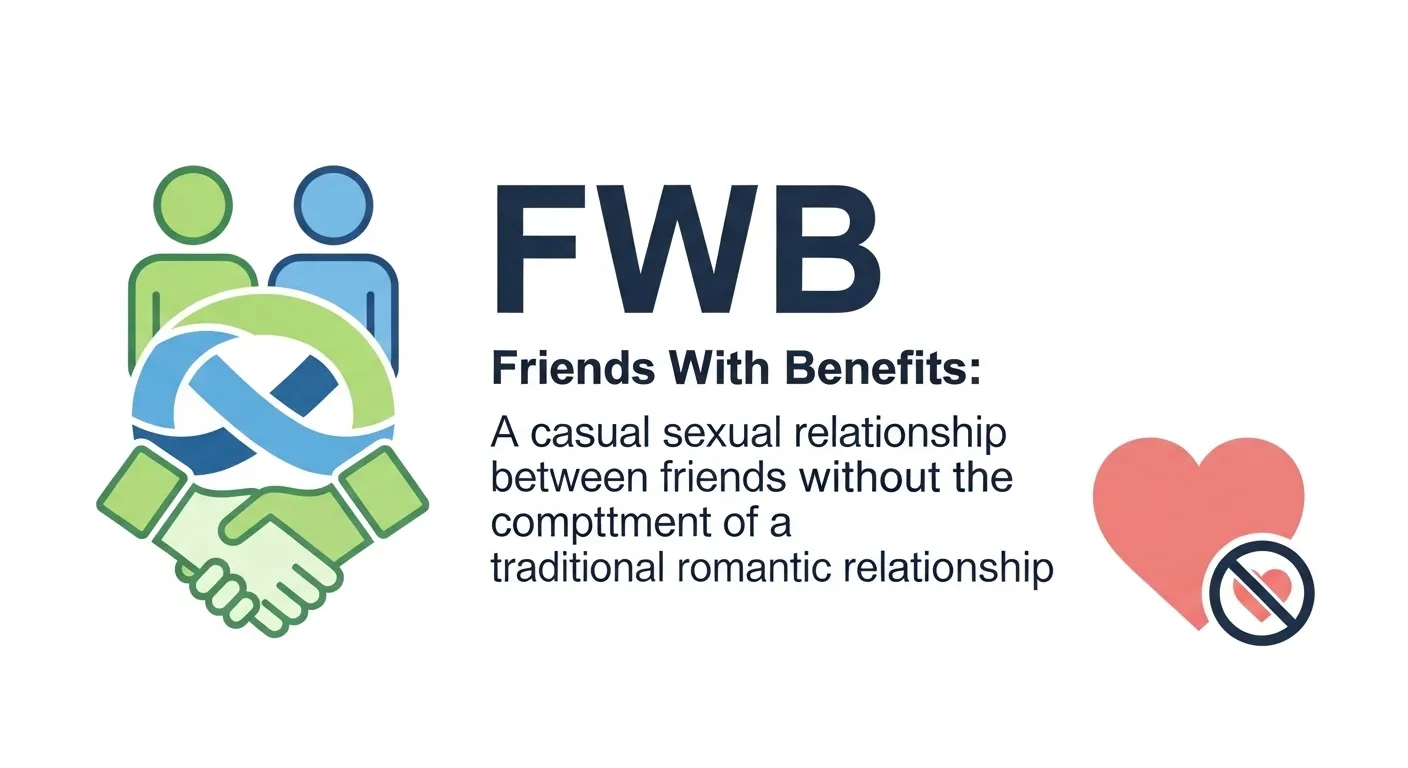
FWB (Friends With Benefits) refers to a relationship where two people are friends who engage in physical intimacy without a committed romantic relationship.
Simple Definition:
- Friends: You share a friendly bond
- With Benefits: You also have a sexual relationship
- No Strings Attached: Typically, no emotional commitment or exclusivity
Example:
Imagine two close friends who hang out regularly. They enjoy each other’s company and decide to add a physical aspect to their relationship—but without labels like “boyfriend” or “girlfriend.”
FWB vs Traditional Relationships
To better understand FWB, let’s compare it with a committed relationship:
| Aspect | FWB Relationship | Traditional Relationship |
|---|---|---|
| Emotional commitment | Low or none | High |
| Exclusivity | Usually no | Yes |
| Labels | None | Boyfriend/Girlfriend |
| Expectations | Minimal | Long-term goals |
| Communication | Casual | Deep and ongoing |
Why Do People Choose FWB Relationships?
FWB relationships are becoming increasingly popular, especially among young adults. Here are some common reasons:
1. Freedom Without Commitment
- No pressure of long-term expectations
- Enjoy companionship without emotional obligations
2. Physical Needs
- Fulfill intimacy needs without a serious relationship
3. Busy Lifestyle
- Ideal for people focused on careers, studies, or personal growth
4. Avoiding Emotional Complications
- Some people prefer to keep things simple and drama-free
5. Comfort with a Known Person
- Unlike hookups, FWB involves someone you trust
Common Rules in an FWB Relationship
To make an FWB arrangement work, boundaries are essential.
Key Rules to Follow:
- Set clear expectations early
- Avoid romantic attachment
- Communicate honestly
- Keep things casual
- Respect each other’s boundaries
- Be prepared to end it if feelings develop
💡 Tip: Many FWB relationships fail due to lack of communication, not the concept itself.
Pros of Friends With Benefits
FWB relationships can offer several benefits if handled correctly.
Advantages:
- ✔ No pressure of commitment
- ✔ Emotional independence
- ✔ Physical satisfaction
- ✔ Flexibility in dating others
- ✔ Comfort and familiarity
Cons of Friends With Benefits
Despite the perks, FWB relationships also come with risks.
Disadvantages:
- ❌ One person may develop feelings
- ❌ Jealousy can arise
- ❌ Miscommunication or unclear expectations
- ❌ Can affect friendship long-term
- ❌ Lack of emotional support
Does FWB Ever Turn Into a Real Relationship?
Yes, it can—but it’s not guaranteed.
Possible Outcomes:
- Stays casual (most common)
- Turns into a committed relationship
- Ends completely (friendship included)
When It Becomes Something More:
- Spending more time together
- Emotional bonding increases
- Jealousy appears
- Desire for exclusivity
⚠️ Warning: If only one person develops feelings, it can lead to heartbreak.
FWB vs Hookups vs Casual Dating
These terms are often confused, but they are different.
FWB (Friends With Benefits):
- Ongoing physical relationship
- Friendship involved
Hookups:
- One-time or occasional encounters
- No emotional or social connection
Casual Dating:
- Dating without serious commitment
- May include emotional connection
Signs an FWB Relationship Is Working
Not all FWB arrangements are messy. Here’s how to tell if it’s going well:
- Both parties are on the same page
- No jealousy or emotional pressure
- Communication is clear
- Boundaries are respected
- Friendship remains intact
Signs It’s Not Working
Watch out for these red flags:
- One person wants more
- You feel emotionally attached
- Communication becomes awkward
- You feel used or unimportant
- The friendship starts fading
How to Start an FWB Relationship
If you’re considering it, approach it thoughtfully.
Steps to Follow:
- Choose the right person (trust matters)
- Have an honest conversation
- Set clear boundaries
- Agree on expectations
- Keep communication open
How to End an FWB Relationship
Ending things respectfully is important.
Best Practices:
- Be honest but kind
- Avoid ghosting
- Explain your reasons
- Respect their feelings
- Give space if needed
Emotional Risks in FWB Relationships
Even with rules, emotions can complicate things.
Common Emotional Challenges:
- Unexpected attachment
- Feeling undervalued
- Confusion about boundaries
- Fear of losing the friendship
💡 Advice: Regular check-ins can help prevent misunderstandings.
Cultural Perspective on FWB Relationships
FWB relationships are more common in Western cultures but are becoming more accepted globally.
In Conservative Societies:
- May be viewed negatively
- Less openly discussed
- Social pressure can influence decisions
In Modern Dating Culture:
- More normalized
- Seen as a personal choice
- Part of evolving relationship dynamics
Alternatives to FWB Relationships
If FWB doesn’t feel right, consider these options:
1. Casual Dating
- Explore connections without pressure
2. Open Relationships
- Committed but not exclusive
3. Traditional Relationships
- Emotional and long-term commitment
4. Staying Single
- Focus on personal growth
Expert Tips for a Successful FWB Relationship
- Always communicate openly
- Don’t ignore your emotions
- Respect boundaries strictly
- Avoid mixed signals
- Be ready to walk away if needed
Frequently Asked Questions (FAQs)
1. Is FWB the same as dating?
No, FWB is not traditional dating. It lacks emotional commitment and long-term expectations.
2. Can FWB turn into love?
Yes, but it’s not guaranteed. It depends on both individuals developing mutual feelings.
3. How long do FWB relationships last?
They can last weeks, months, or even years—but most are temporary.
4. Is FWB healthy?
It can be healthy if both people communicate clearly and respect boundaries.
5. Can you be friends after FWB ends?
Sometimes, yes. But it depends on how things ended and whether emotions were involved.
6. What are the biggest risks of FWB?
Emotional attachment, jealousy, and losing the friendship.
7. Should I try an FWB relationship?
Only if you’re emotionally prepared and understand the risks involved.
Conclusion
Understanding the FWB meaning in dating is essential before stepping into this type of relationship. While it offers freedom, flexibility, and physical connection, it also requires clear communication, emotional awareness, and strong boundaries.
FWB relationships can work—but only when both people are on the same page. If you’re looking for something serious or emotionally fulfilling, this may not be the best fit. However, if you value independence and clarity, it can be a practical choice.
Final Takeaways:
- Know what you want before starting
- Communicate openly and honestly
- Respect boundaries at all times
- Be ready to walk away if needed
Ultimately, the best relationship—FWB or otherwise—is one that aligns with your values, needs, and emotional well-being.

I’m a language-focused blogger from the United States, and I write about modern texting habits and online expressions. My goal is to help readers stay up to date with constantly evolving digital slang by sharing accurate meanings, practical usage tips, and real conversational examples.