In today’s fast-paced digital world, text messaging slang has become a language of its own. One of the most commonly used yet often misunderstood abbreviations is “B”. If you’ve ever received a message like “Hey B, what’s up?” and wondered what it means, you’re not alone.
Understanding the “B meaning in texts” is essential for anyone navigating modern conversations—whether you’re chatting with friends, scrolling through social media, or trying to decode online slang.
In this comprehensive guide, we’ll break down everything you need to know about what “B” means in texting, how it’s used, where it comes from, and how to respond naturally.
What Does “B” Mean in Texting?
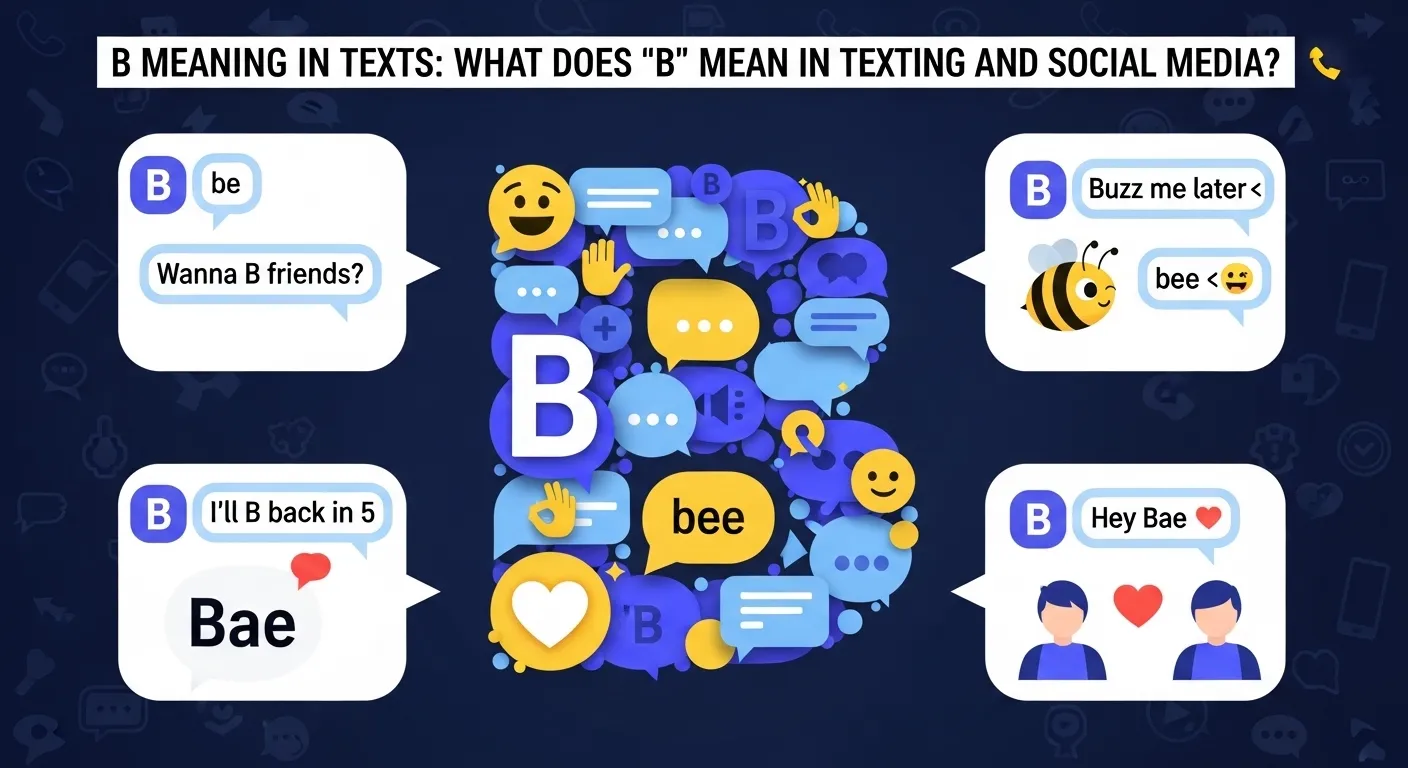
At its core, “B” is a shortened slang term that typically means:
👉 “Babe” or “Baby”
It’s often used as a term of endearment between:
- Romantic partners ❤️
- Close friends 🤝
- People who are comfortable with each other
Simple Examples:
- “Miss you, B” → Miss you, babe
- “What you doing, B?” → What are you doing, baby?
- “Love you B” → Love you, baby
Other Meanings of “B” in Texts
While “B” most commonly means babe, it can have different meanings depending on context.
1. “Bro” or “Buddy”
Among friends, especially in casual or playful conversations:
- “Yo B, let’s go out”
- “Chill B, it’s not that serious”
👉 Here, “B” = friend or bro
2. “Be” (Shortened Form)
Sometimes “B” is just a short version of the word “be”:
- “I’ll B there soon” → I’ll be there soon
- “Just B yourself” → Just be yourself
3. “B” as a Nickname
Some people use “B” as a nickname, especially if:
- Their name starts with B (e.g., Bilal, Ben, Bella)
- It’s a personalized or inside-joke nickname
4. “B” in Music and Pop Culture Influence
The popularity of “B” as slang comes heavily from:
- Hip-hop culture 🎵
- Social media platforms (TikTok, Instagram)
- Casual texting habits
It’s often used to sound cool, relaxed, and affectionate.
When to Use “B” in Texting
Using “B” correctly depends on your relationship and tone.
✅ Use “B” when:
- You’re talking to someone close
- You want to sound friendly or affectionate
- You’re in a casual conversation
❌ Avoid using “B” when:
- Talking to someone formally
- Messaging your boss or teacher
- You’re unsure of the other person’s comfort level
Tone Matters: Friendly vs Romantic
The meaning of “B” changes depending on how it’s used.
| Context | Meaning | Example |
|---|---|---|
| Romantic | Babe/Baby | “Goodnight B ❤️” |
| Friendly | Bro/Buddy | “What’s up B?” |
| Neutral | Just “be” | “B careful” |
How “B” Is Used on Social Media
On platforms like Instagram, Snapchat, and WhatsApp, “B” appears in:
Captions
- “Stay real, B ✨”
- “Love you forever B ❤️”
Comments
- “Looking good B 🔥”
- “Miss you B”
Direct Messages
- “Hey B, long time no talk!”
👉 It adds a personal and casual vibe to communication.
Common Misunderstandings About “B”
Even though it’s simple, “B” can be confusing.
❗ Misinterpretation #1: Always Romantic
Not always! It can simply mean friend or bro.
❗ Misinterpretation #2: It’s Rude or Disrespectful
Actually, it’s usually the opposite—it’s friendly or affectionate.
❗ Misinterpretation #3: It Has Only One Meaning
As you’ve seen, “B” is context-dependent.
Similar Slang Terms to “B”
If you’re exploring texting slang, here are related terms:
Affectionate Slang
- Babe
- Baby
- Boo
- Bae
- Hun
Friendly Slang
- Bro
- Dude
- Fam
- Bestie
Real-Life Examples of “B” in Conversations
Example 1: Romantic Chat
- A: “I miss you B”
- B: “Miss you too ❤️”
Example 2: Friendly Conversation
- A: “Yo B, game tonight?”
- B: “Yeah, I’m in!”
Example 3: Casual Text
- A: “Just B patient”
- B: “Trying 😅”
Why People Use “B” Instead of Full Words
1. Speed & Convenience
Typing “B” is faster than writing “babe” or “be”.
2. Trend & Style
It feels modern, trendy, and fits digital culture.
3. Personal Connection
Using “B” can make messages feel:
- More intimate
- More relaxed
- More authentic
Is “B” Appropriate for Everyone?
Not always. Here’s a quick guideline:
✔ Safe to Use With:
- Friends
- Romantic partners
- Close acquaintances
✖ Avoid With:
- Professional contacts
- Formal conversations
- New or unfamiliar people
How to Respond When Someone Calls You “B”
If someone texts you “B,” here are natural ways to reply:
😊 Friendly Response
- “What’s up?”
- “Hey!”
❤️ Romantic Response
- “Hey babe ❤️”
- “Miss you too!”
🤔 Unsure Response
- “Hey, what’s going on?”
(Neutral and safe)
FAQs About “B Meaning in Texts”
1. Does “B” always mean “babe”?
No. While it often means babe or baby, it can also mean bro, buddy, or simply be depending on context.
2. Is it okay to use “B” with friends?
Yes! Many people use it casually to mean bro or friend.
3. Can “B” be used in professional messages?
No. It’s considered informal and should be avoided in professional communication.
4. What does it mean if a guy calls you “B”?
It could mean:
- He’s being friendly
- He’s flirting
- He’s comfortable with you
Context and tone matter.
5. Is “B” the same as “bae”?
Not exactly, but they’re similar. “Bae” specifically means before anyone else, while “B” is a shorter, more flexible term.
6. Why do people use “B” instead of full words?
Mainly for speed, style, and a casual tone in texting.
7. Is “B” common in texting today?
Yes! It’s widely used across social media and messaging apps, especially among younger users.
Final Thoughts: Understanding “B” in Texting
The meaning of “B” in texts may seem small, but it carries a lot of emotional and social nuance. Whether it means babe, bro, or simply be, the key is always context.
Key Takeaways:
- “B” usually means babe or baby
- It can also mean friend, bro, or “be”
- Tone and relationship determine its meaning
- It’s best used in casual conversations
Actionable Tip 💡
Next time you see “B” in a message, don’t overthink it—look at:
- Who sent it
- The tone of the message
- Your relationship with them
That’s the easiest way to understand what it truly means.

I’m a language-focused blogger from the United States, and I write about modern texting habits and online expressions. My goal is to help readers stay up to date with constantly evolving digital slang by sharing accurate meanings, practical usage tips, and real conversational examples.