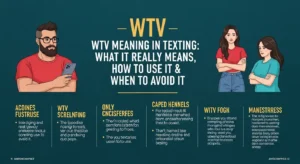
In today’s fast-paced digital world, texting has become its own language. Abbreviations like LOL, BRB, and OMG are widely understood—but what about WTV? If you’ve seen this term in messages, social media, or chats and wondered what it means, you’re not alone.
Understanding WTV meaning in texting is important because tone and intention can easily be misunderstood online. A simple three-letter abbreviation can come across as chill, dismissive, or even rude—depending on how it’s used.
In this complete guide, we’ll break down everything you need to know about WTV, including its meaning, usage, tone, examples, alternatives, and common mistakes.
📌 What Does WTV Mean in Texting?
WTV is a shorthand abbreviation for the word “whatever.”
✔️ Simple Definition:
- WTV = Whatever
It’s commonly used in texting, chats, and social media to:
- Express indifference
- Show agreement without enthusiasm
- End a conversation
- Convey frustration or sarcasm
🧠 The Real Meaning Behind WTV (Tone Matters!)
While WTV literally means “whatever,” its emotional meaning depends heavily on context.
It can express:
- 😐 Indifference – “I don’t really care.”
- 🙄 Annoyance – “Do what you want.”
- 😏 Sarcasm – “Yeah, sure… whatever.”
- 😌 Casual agreement – “I’m okay with it.”
👉 This makes WTV a tone-sensitive abbreviation—meaning it can be misunderstood if you’re not careful.
💬 Examples of WTV in Text Conversations
Here are some real-life examples to help you understand how WTV is used:
1. Casual / Neutral Use
- Friend: “Should we watch a movie or go out?”
- You: “WTV, I’m fine with anything.”
👉 Meaning: You’re flexible and don’t mind either option.
2. Annoyed or Dismissive Use
- Friend: “You never listen to me.”
- You: “WTV.”
👉 Meaning: You’re irritated or brushing off the conversation.
3. Ending a Conversation
- Person A: “You always cancel plans!”
- Person B: “WTV.”
👉 Meaning: Conversation shut down—possibly frustration or disinterest.
4. Sarcastic Tone
- “Oh yeah, WTV you say 🙄”
👉 Meaning: You don’t actually agree—you’re being sarcastic.
📊 WTV Meaning Based on Context
| Context | Meaning of WTV | Tone |
|---|---|---|
| Friendly chat | Whatever / up to you | Neutral |
| Argument | I don’t care | Negative |
| Casual planning | I’m flexible | Relaxed |
| Sarcastic reply | Sure… whatever | Mocking |
| Ending conversation | I’m done talking | Dismissive |
📱 Where Is WTV Commonly Used?
You’ll most often see WTV in:
- 💬 Text messages (SMS, WhatsApp)
- 📱 Social media (Instagram, Snapchat, TikTok)
- 💻 Online chats (Discord, gaming chats)
- 🧑🤝🧑 Casual conversations among friends
👉 It’s rarely used in formal writing or professional communication.
⚠️ Is WTV Rude? (Important to Know!)
Yes—it can be rude depending on how it’s used.
When WTV might sound rude:
- During arguments
- When responding to serious topics
- When used without explanation
Example:
- “I tried my best.”
- “WTV.”
👉 This can come across as dismissive or disrespectful.
✔️ Tip:
If you’re unsure, avoid using WTV in sensitive conversations.
👍 When It’s Okay to Use WTV
Use WTV when:
- You’re talking casually with friends
- You genuinely don’t mind the outcome
- The conversation is light-hearted
Example:
- “Pizza or burgers?”
- “WTV 😄”
👉 Here, it sounds relaxed—not rude.
👎 When You Should Avoid Using WTV
Avoid using WTV when:
- Talking to someone upset
- In professional or formal messages
- Communicating with elders or authority figures
- Trying to resolve conflict
👉 In these situations, clarity and empathy are more important.
🔄 Alternatives to WTV (Better Options)
If you want to sound clearer or more polite, try these alternatives:
😊 Friendly Alternatives:
- “I don’t mind 😊”
- “Up to you!”
- “Anything works for me”
- “I’m good with whatever you choose”
😐 Neutral Alternatives:
- “It doesn’t matter to me”
- “Either option is fine”
🚫 Avoid harsh tone:
Instead of:
- “WTV.”
Try:
- “Let’s just go with your idea.”
👉 Small changes can make a big difference in tone!
📚 Origin and Popularity of WTV
The abbreviation WTV comes from the full word “whatever,” which has been used in English for decades.
Timeline:
- 📖 Pre-2000s: “Whatever” used in spoken language
- 📱 Early texting era: Abbreviations become popular
- 🌐 Social media boom: WTV spreads widely
It became popular because:
- It saves time
- Fits fast-paced conversations
- Matches informal texting style
🤔 Common Misunderstandings About WTV
❌ Misconception 1: WTV Always Means Rude
✔️ Truth: It depends on tone and context.
❌ Misconception 2: WTV Means “What the heck”
✔️ Truth: That’s incorrect. It strictly stands for “whatever.”
❌ Misconception 3: It’s Safe in All Conversations
✔️ Truth: It can easily be misinterpreted in serious situations.
📊 WTV vs Similar Texting Slang
Here’s how WTV compares to other slang:
| Slang | Meaning | Tone |
|---|---|---|
| WTV | Whatever | Neutral / Rude |
| IDC | I don’t care | Often blunt |
| IDK | I don’t know | Neutral |
| IMO | In my opinion | Thoughtful |
| NVM | Never mind | Casual / Dismissive |
👉 Compared to others, WTV sits between neutral and dismissive depending on context.
💡 Practical Tips for Using WTV Correctly
To use WTV effectively without sounding rude:
- ✔️ Add emojis to soften tone (e.g., “WTV 😊”)
- ✔️ Use it only with people who understand your style
- ✔️ Avoid using it in emotional conversations
- ✔️ Consider rephrasing if clarity matters
🌍 Real-Life Use Cases
✔️ Friends Chat
- “Where should we go?”
- “WTV, I’m easy.”
❌ Relationship Argument
- “Why didn’t you call me?”
- “WTV.”
👉 This can escalate the situation.
✔️ Gaming Chat
- “Which map?”
- “WTV bro.”
👉 Totally acceptable in casual environments.
❓ FAQs About WTV Meaning in Texting
1. What does WTV stand for in texting?
WTV stands for “whatever.” It expresses indifference, agreement, or dismissal depending on context.
2. Is WTV rude in messages?
It can be. If used in arguments or serious conversations, it may sound dismissive or disrespectful.
3. Can WTV be used in professional communication?
No. It’s considered informal and should be avoided in emails, work chats, or formal settings.
4. What is the difference between WTV and IDC?
- WTV = Whatever (flexible or dismissive)
- IDC = I don’t care (more direct and often harsher)
5. How can I make WTV sound less rude?
Add context or emojis, such as:
- “WTV 😊 I’m fine with anything!”
6. Is WTV commonly used among all age groups?
It’s mostly popular among younger users, especially on social media and texting platforms.
7. Are there better alternatives to WTV?
Yes! Try:
- “Up to you”
- “I don’t mind”
- “Anything works”
These sound more polite and clear.
🧾 Conclusion: Should You Use WTV?
The WTV meaning in texting may seem simple, but its impact depends entirely on how you use it.
🔑 Key Takeaways:
- WTV = Whatever
- Tone can range from friendly to rude
- Best used in casual conversations
- Avoid in serious or emotional discussions
- Alternatives can help you sound clearer and more polite
👉 Final Tip: If there’s any chance your message could be misunderstood, it’s better to choose clearer words over abbreviations.

I’m a content editor and language researcher based in California with a focus on texting terminology, internet slang, and Gen Z communication styles. Through my writing, I help readers understand what popular text phrases mean, how they’re used, and when they fit naturally into casual conversations.