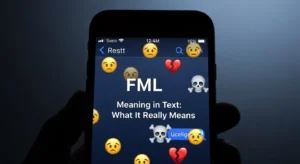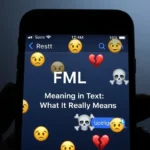
In today’s fast-paced digital world, short forms and slang dominate how we communicate. One such popular abbreviation is “FML”—a phrase you’ve probably seen in texts, social media posts, or memes. But what does it really mean, and how should you use it?
If you’ve ever felt confused or unsure about this expression, you’re in the right place. In this guide, we’ll break down the FML meaning in text, its origin, usage, examples, and even better alternatives you can use depending on the situation.
📱 What Does FML Mean in Text?
FML stands for:
“F* My Life”**
It’s commonly used to express frustration, disappointment, embarrassment, or annoyance about a situation.
Simple Definition:
FML = A reaction to something going wrong or not as expected.
💬 Why Is FML So Popular?
The popularity of FML in texting and online chats comes from its ability to quickly express emotion without typing a long explanation.
Reasons people use FML:
- It’s short and expressive
- It captures strong emotions instantly
- It’s widely understood across platforms
- It fits perfectly into memes and relatable content
📖 The Origin of FML
The phrase gained major popularity from the website “FMyLife” (FML), where users shared short, embarrassing or unfortunate life moments.
Over time, the acronym spread across:
- Text messages 📲
- Social media platforms
- Online forums and memes
Now, it’s a mainstream slang term used worldwide.
🧠 How to Use FML in Texting (With Examples)
Using FML correctly depends on the context. It’s usually placed at the end of a sentence to emphasize frustration.
✔️ Common Examples:
- “I just dropped my phone and cracked the screen. FML.”
- “Missed my alarm and now I’m late for work. FML.”
- “Studied the wrong chapter for the exam 😭 FML.”
✔️ Casual Conversations:
- Friend: “Did you fail the test?”
- You: “Yeah… FML.”
😅 Situations Where People Use FML
Here are typical scenarios where FML is commonly used:
1. Everyday Frustrations
- Losing keys
- Missing a bus
- Spilling coffee
2. Embarrassing Moments
- Sending a text to the wrong person
- Tripping in public
- Saying something awkward
3. Bad Luck Situations
- Phone dying during an important call
- Internet going down during a meeting
4. Minor Life Problems (Often Humorously)
- “Pizza arrived cold. FML.”
⚠️ Is FML Offensive?
Yes—and no.
While FML contains a swear word, its offensiveness depends on the context and audience.
👍 Acceptable in:
- Casual chats with friends
- Social media posts
- Informal texting
🚫 Avoid in:
- Professional emails
- Workplace communication
- Formal conversations
👉 Tip: If unsure, use a softer alternative (we’ll cover those below).
🔄 Alternatives to FML (Cleaner & Polite Options)
If you want to express frustration without using strong language, here are some great alternatives:
😌 Mild Alternatives:
- “My luck is terrible”
- “Just my luck”
- “What a day”
- “This sucks”
- “I’m so done”
😂 Funny Alternatives:
- “Why me?”
- “Life hates me today”
- “Of course this happens now”
😇 Professional-Friendly Options:
- “That’s unfortunate”
- “Not my day”
- “Things didn’t go as planned”
📊 FML vs Other Texting Slang
Here’s how FML compares to other common abbreviations:
| Abbreviation | Meaning | Tone | Usage |
|---|---|---|---|
| FML | F*** My Life | Frustrated | Negative situations |
| SMH | Shaking My Head | Disappointed | Mild frustration |
| LOL | Laugh Out Loud | Funny | Humor |
| OMG | Oh My God | Surprise | Any strong reaction |
| TBH | To Be Honest | Honest tone | Opinions |
🤔 Common Misunderstandings About FML
❌ Myth 1: FML is always serious
👉 Truth: It’s often used humorously for minor problems.
❌ Myth 2: Only young people use it
👉 Truth: It’s widely used across all age groups online.
❌ Myth 3: It’s always inappropriate
👉 Truth: It’s fine in casual settings but not in formal communication.
🌐 FML in Social Media & Memes
On platforms like Instagram, TikTok, and Twitter, FML is often used in a humorous or exaggerated way.
Example:
- “Spent 2 hours getting ready and my plans got canceled. FML 😭”
It’s part of relatable content culture, where people share small life struggles for laughs.
💡 When You Should NOT Use FML
Even though it’s popular, there are times when you should avoid it:
- During job interviews
- In professional emails
- While talking to elders or authority figures
- In academic writing
👉 Always consider your audience before using slang.
🧾 Real-Life Mini Scenarios
Scenario 1:
You wake up late and miss your exam.
👉 “I overslept and missed my test. FML.”
Scenario 2:
You accidentally like an old post while stalking someone.
👉 “Liked a 2018 photo by mistake… FML.”
Scenario 3:
Your phone dies during an important call.
👉 “Battery died mid-interview. FML.”
❓ FAQs About FML Meaning in Text
1. What does FML stand for in texting?
FML means “F* My Life.”** It expresses frustration or disappointment.
2. Is FML rude or offensive?
It can be slightly offensive due to the swear word, but it’s commonly accepted in casual conversations.
3. Can I use FML in professional settings?
No, it’s best to avoid it in formal or professional communication.
4. Is FML always negative?
Mostly yes, but it’s often used humorously for small problems.
5. What are safer alternatives to FML?
You can say:
- “What a day”
- “Just my luck”
- “That’s unfortunate”
6. Is FML used worldwide?
Yes, it’s a globally recognized slang term, especially in online communication.
7. Can FML be used in jokes or memes?
Absolutely! It’s widely used in humorous and relatable content.
🏁 Conclusion
The FML meaning in text is simple yet powerful—it’s a quick way to express frustration, embarrassment, or bad luck. While it’s widely used and understood, it’s important to be mindful of where and when you use it.
✅ Key Takeaways:
- FML = “F*** My Life”
- Used to express frustration or disappointment
- Best for casual conversations only
- Has cleaner alternatives for polite situations
- Often used humorously in memes and social media
💬 Final Tip:
Before typing “FML,” ask yourself:
👉 Is this the right audience and setting?
If yes—go ahead. If not—choose a softer expression.

I’m a content editor and language researcher based in California with a focus on texting terminology, internet slang, and Gen Z communication styles. Through my writing, I help readers understand what popular text phrases mean, how they’re used, and when they fit naturally into casual conversations.