In today’s fast-paced digital world, texting and online chats have created a whole new language filled with abbreviations and slang. One of the most commonly used terms you might come across is “ASL.” But what exactly does ASL meaning in text stand for, and how should you use it?
Whether you’re chatting on social media, gaming platforms, or messaging apps, understanding ASL in text messages can help you communicate more effectively and avoid confusion. In this complete guide, we’ll break down everything you need to know about ASL meaning, its origins, usage, variations, and even when to avoid it.
What Does ASL Mean in Text? (Simple Definition)
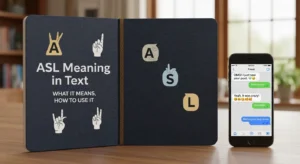
The abbreviation ASL typically stands for:
👉 Age / Sex / Location
It’s a quick way to ask someone for basic personal information during online conversations.
Example:
- Person 1: Hey!
- Person 2: Hi 😊
- Person 1: ASL?
Here, the person is asking:
- How old are you?
- What’s your gender?
- Where are you from?
The Origin of ASL in Online Chat
The term ASL dates back to the early days of the internet, especially during the era of chat rooms and instant messaging platforms like:
- AOL Instant Messenger (AIM)
- Yahoo Messenger
- IRC (Internet Relay Chat)
Back then, people used ASL as a quick introduction tool when meeting strangers online. Since typing speed and convenience were important, abbreviations like ASL became widely popular.
Why People Use ASL in Text Messages
ASL is still used today because it is:
- ✅ Fast and convenient
- ✅ Easy to understand (for many users)
- ✅ Useful for quick introductions
Common situations where ASL is used:
- Chatting with strangers online
- Dating apps or social platforms
- Gaming communities
- Group chats
Different Meanings of ASL (Important to Know)
While ASL usually means Age, Sex, Location, it can have other meanings depending on context.
1. Age, Sex, Location (Most Common)
Used in casual chats.
2. American Sign Language
ASL can also stand for:
👉 American Sign Language, a complete visual language used by the deaf community.
Example:
- “I’m learning ASL”
👉 Here, it means sign language, not age/sex/location.
How to Use ASL in Text Conversations
Using ASL is simple, but it depends on the situation.
✔️ Casual Use:
- “Hey, ASL?”
- “ASL pls?”
✔️ More Polite Version:
- “Can I ask your age and where you’re from?”
- “Tell me a bit about yourself 😊”
Examples of ASL in Real Conversations
Example 1: Casual Chat
- User A: Hello!
- User B: Hi!
- User A: ASL?
- User B: 22/F/UK
Example 2: Gaming Chat
- “Anyone here? ASL?”
Example 3: Social Media DM
- “Hey! ASL if you don’t mind?”
Is It Safe to Share ASL Information?
⚠️ Be careful when sharing personal details online.
Safety Tips:
- Avoid sharing exact location (city is enough)
- Don’t give your full address
- Be cautious with strangers
- Trust your instincts
👉 Remember: Not everyone online has good intentions.
Modern Alternatives to ASL
ASL is considered a bit outdated in some platforms. Today, people prefer more natural ways of asking:
Alternatives:
- “Where are you from?”
- “How old are you?”
- “Tell me about yourself”
- “What’s your background?”
These sound more polite and less intrusive.
ASL vs Other Internet Slang
Here’s how ASL compares to other popular texting abbreviations:
| Abbreviation | Meaning | Usage |
|---|---|---|
| ASL | Age, Sex, Location | Basic info |
| BRB | Be Right Back | Leaving chat briefly |
| LOL | Laugh Out Loud | Express laughter |
| DM | Direct Message | Private chat |
| IDK | I Don’t Know | Express uncertainty |
When NOT to Use ASL
Using ASL isn’t always appropriate. Avoid it in:
- ❌ Professional conversations
- ❌ Formal emails
- ❌ Workplace chats
- ❌ Serious discussions
Why?
It can come across as:
- Too direct
- Outdated
- Slightly intrusive
ASL in Social Media and Dating Apps
On platforms like:
- Snapchat
- TikTok
- Dating apps
ASL might still appear, but it’s less common now.
Modern Trend:
People prefer:
- Profiles with personal info
- Bio descriptions
- Casual conversations
Common Misunderstandings About ASL
❌ Myth 1: ASL is always rude
✔️ Truth: It depends on context and tone.
❌ Myth 2: ASL only means one thing
✔️ Truth: It can also mean American Sign Language.
❌ Myth 3: Everyone understands ASL
✔️ Truth: Younger users may not recognize it.
Cultural and Generational Differences
- Older internet users: Familiar with ASL
- Younger generation (Gen Z): May find it outdated
- Global users: Might not understand it at all
👉 This is why context matters!
Pros and Cons of Using ASL
✅ Pros:
- Quick introduction
- Saves time
- Easy to type
❌ Cons:
- Can feel intrusive
- Not always appropriate
- Outdated in modern chats
Best Practices for Using ASL
If you still want to use ASL, follow these tips:
- ✔️ Use it in casual chats only
- ✔️ Be polite and respectful
- ✔️ Don’t pressure others to answer
- ✔️ Be mindful of privacy
FAQs About ASL Meaning in Text
1. What does ASL mean in texting?
ASL stands for Age, Sex, Location and is used to ask basic personal information in online chats.
2. Is ASL still used today?
Yes, but it’s less common. Many people prefer more natural conversation starters now.
3. Can ASL mean something else?
Yes! It can also mean American Sign Language, depending on the context.
4. Is it rude to ask ASL?
Not always, but it can feel intrusive if used too early or in the wrong setting.
5. Should I reply to ASL messages?
Only if you feel comfortable. Never share personal details if you’re unsure about the person.
6. What are safer alternatives to ASL?
You can ask:
- “Where are you from?”
- “How old are you?”
- “Tell me about yourself”
7. Why was ASL popular before?
It was widely used in early internet chat rooms where quick typing and short messages were essential.
Conclusion
The term ASL meaning in text has been around for decades and still pops up in online conversations today. While it originally served as a quick way to introduce yourself, modern communication has evolved into more natural and personalized interactions.
Key Takeaways:
- ASL = Age, Sex, Location
- It originated from early internet chat rooms
- It can also mean American Sign Language
- It’s less popular but still used in casual chats
- Always prioritize privacy and safety
👉 Final Tip: Instead of relying solely on abbreviations like ASL, try engaging in friendly, meaningful conversations. It not only feels more natural but also helps build better connections online.

I’m a language-focused blogger from the United States, and I write about modern texting habits and online expressions. My goal is to help readers stay up to date with constantly evolving digital slang by sharing accurate meanings, practical usage tips, and real conversational examples.